Showing posts with label Lying. Show all posts

Tuesday, February 10, 2026

Deception: The Subtle Lie

It came as a cautionary warning and at the same time simple instruction. I had learned from my school friends that the aluminum foil on a gum wrapper could be separated from its wax paper backing and then pressed over a penny to make it look like a shiny dime.

I showed this neat trick to my mom and told her that a person could make a lot of money using the aluminum covered pennies as dimes. That's when mom's warning came, "You know, that is deceitful."

I was 11 years old and asked the meaning of this new vocabulary word.

Mom instructed, "It's a lie even though you didn't use words." She described the aluminum covered penny as a fake or counterfeit. (I knew those words.)

My disappointment was short-lived. After all, I realized that only a naïve person would be fooled. Fake, counterfeit, lie, deception; an unforgettable lesson.

People cleverly use a variety of words and phrases to mask the reality of their lie. At a very young age we all learned what it meant to tell a lie. We learned that lying is morally wrong and generally destructive. Nobody wants to be told a lie, and nobody wants to be labeled a liar. So, it is natural to try to mask a lie.

Many people think that 'white lies' are acceptable. Many people justify lying if it is for a good reason. It is not uncommon to hear people explain (rationalize) how their lie was not really a lie, it just wasn't the whole truth (deception).

Deceit might be the worst kind of lie because it is not as easy to evaluate as a 'boldfaced lie.' Deceit is most often subtle. As in my illustration above, deceit might not use words. Where words are used, cleverly crafted communication may obscure the full truth. Deceit often involves trickery. In whatever way it is described, however, deceit is always a lie.

Numerous passages in the Psalms and Proverbs describe a companion to deceit: destruction. Deceit is destructive because it violates trust. When trust is lost family relationships are broken, friendships are destroyed, work relationships are strained. Broken trust is difficult to repair.

It is no surprise, then, that Solomon issues a clear and strong warning:

Put away from you a deceitful mouth
And put devious speech far from you.
—Proverbs 4:24
Deceit is in the heart of those who devise evil,
But counselors of peace have joy.
—Proverbs 12:20

Those who use deception in life carry a ‘toolbox’ full of techniques to shade the truth and manipulate the perceptions of people. Sadly, most deceivers have manipulated their perception of themselves: self-deception.

Whenever you are tempted to deceive someone, you should remember:
  • God hates a lying tongue (Proverbs 6:17). It has no part in His kingdom.
  • One of the most common strategies of the devil is deception. After all, he is the father of lies. (John 8:44) Do you really want to be like the devil?!

Be wise. No lies.


Mark Stinnett

February 8, 2026

Wednesday, May 31, 2023

Standing Among Greatness

It is, once again, that time of year: the annual celebration of mothers, Mothers’ Day, the end of the school year, the opening of pools across America...and graduation ceremonies.

Graduation is just what the word implies, an incremental advancement, but more specifically in one’s educational conquest. It is a time to celebrate a milestone of achievement. For many, high school will be their last, for others, college. It is a time of excitement because it closes the chapter on one phase of life while at the same time opening another.

There are forms to fill out as a person approaches graduation and thereafter. That is true whether additional formal educational is on the horizon or you look for a job. I remember hearing about a naïve young man who was out of work and turned to the Bible for help. He closed it in misguided frustration when he found no help in the book of Job. If only he had turned to Proverbs.
Like clouds and wind without rain
is a man who boasts of his gifts falsely.
—Proverbs 25:14
Do you see that this proverb applies to your resume and all those forms you fill out? Some folks try to play the system and put themselves in the shoes of an employer. They reason (by assuming) that other people boast excessively or even lie on their resume. So, in order to compete, they do the same. Is that wise??

The proverb reveals truth. If you boast falsely, that is, lie on a resume or in an interview, you might actually succeed in getting what you have applied for, but the lie will catch you. The cloud, figuratively speaking, boasts of rain, but has none to offer. You will be like a cloud without rain having little to offer. So, tell the truth.

I have heard numerous Christians describe their experience in writing resumes, filling out job applications, and interviewing. They sincerely wish to avoid pride, but know that they need to communicate their level of education, skill , and experience. They have to speak positively about themselves. It is like walking a tightrope between integrity and pride. All those who feel the struggle should be admired. Those who do not share this struggle and enjoy self-boasting should rethink their attitude.

Jesus instructed His disciples to speak the truth plainly. He said to let your “Yes” be “Yes,” and let your “No” be “No.” In simple terms, tell the truth and do so clearly. Don’t play games.

You should know, however, that telling the truth is not enough. That is called honesty, and it is imperative. But you need to be a person of integrity. A person of integrity might be described by saying, “He is a man of his word.” He is honest, but he also follows through with all the things he has said. If he makes a promise, that is, gives you his word, he keep it.

There was a time when people would speak and those listening believed that they would keep their word. Paper forms and legal contracts were unnecessary because integrity was valued, expected and honored. Integrity still is valued.

If you set an appointment, keep it. If you say you will accomplish it, do it. If you assure someone that you will help them, do not back out because the timing is inconvenient. You do not have to use the words, “I give you my word,” or “I promise”; your word should be just as strong. If you speak it, follow through according to your word. Those who live a life of integrity stand among the greatest and find approval with God.

Mark Stinnett

May 28, 2023

Monday, May 1, 2023

Honest Faith

On one occasion Jesus’ authority was questioned by some Jewish leaders and He replied to them with a question. If they would tell him the source of John’s baptism (whether it was from heaven or from men), He would answer their question. With man’s wisdom, “they began reasoning among themselves.” (Read about this in Matthew 21.)

This article is not about the wit and wisdom of Jesus. Nor is it about his ability to think quickly on His feet. Rather, it is about the value that God places on simple honesty and genuine faith.

Negative examples of our day teach our children how to hide truth through rationalization, how to deceive without using lying words; how to twist meanings of words, how to dodge a question by answering a related but different question. Consider how the media has participated, how politicians have made it their profession, and how many adults have played the same games.

A husband is asked, “What made you late from work?” Or, “What happened to that money in the checking account?”
And he begins to reason . . .

A teen is asked, “Where will you be going?” “Who is going with you?” “Will there be parents there?”
And she begins to reason . . .

A friend is asked, “I thought you were going to attend; what happened?”
And he begins to reason . . .

A parent is reminded, “You said you would take us kids to the park.”
And he begins to reason . . .

The Jews were trapped. If they admitted that John’s authority was from heaven, Jesus would rebuke them for not responding to John. Yet, if they said that it was from man, they feared the people. So, they rationalized. Their answer was not truthful, and yet, it was not a blatant lie. They began to reason and cleverly responded, “We do not know.”

We might be impressed or even turn a slight grin with Jesus’ response, a refusal to answer. It is almost like a punch line to a joke. But wait! The parable that follows IS the punch line and it is meant for us!

In the parable that followed, two sons were asked to work for their father. One agreed but did no work; the other refused but later regretted his answer and did the work. Jesus explained how their actions proved to be their true answers. He applied the parable to the people of his day by indicating that those who were hated by society would enter the kingdom ahead of the religious elite. But, why?

The first son represents the Jewish leaders who questioned Jesus. They claimed to do God’s will but did not do it. The second son represents the sinners whose lives were opposed to God at first, but who ultimately turned to do God’s will. But there is more….

The Jews tried to trap Jesus, yet they were trapped themselves. They believed in the power of their own intellect and reasoning. In their unbelief they refused the “way of righteousness” when John came. Then, when they were confronted with Jesus they rebelled with rationalizations in order to hide their unbelief. They began to reason....

In contrast to the Jewish leaders, the sinners, when confronted with Jesus, acted in faith and turned from their former rebellion. The faith of both made an honest response toward God. The leaders had no faith and rejected Jesus; but in honest faith the sinners turned to Jesus.

The reasoning of man tempts the lips with lies. Yet an honest heart needs no words; it responds to God and His word in faith.

We are all asked by God, “Will you trust Me?”
How will you respond? 
   Do you feel trapped by the question?
   Do you know the answer, but don't want to admit it?
      Will you begin to reason? 
          Will you speak at all?

Ultimately your actions will tell the truth and will reveal your faith!


Mark Stinnett
April 30, 2023

Monday, April 24, 2023

Is God Unreasonable?

First, there was Eve. Then there was Isaac, then Joshua, and then an obscure prophet.

We might call it a scam. We try to guard against the clever hoax. Politicians spin the truth. Many marketers masterfully manipulate the eyes, and ears, and minds of potential buyers. They do so with digital photo deception, fine print, psychological trickery, crafty word play, and the absence of information. It is all called DECEPTION!

Deception may be the cruelest of lies. It is often compelling because the message seems believable; falsehood mixed with truth. Or, the lie is hidden because the messenger is believed to be trustworthy. Ultimately, however, deception is just a lie.

When God confronted Eve with her sin, she blamed the serpent, “The serpent deceived me, and I ate.” (Read about in Genesis 3.)

When Isaac was old and nearly blind, his son Jacob disguised himself as the firstborn son so that he could receive the coveted blessing from his father. Isaac was horrified when he realized the deception, yet he had already spoken. (Read about it in Genesis 27.)

People from the nearby city of Gibeon disguised themselves as foreigners from a faraway place when they visited Israel. Joshua and the leaders of Israel were deceived into making a covenant with the Gibeonites, and going against the Lord’s instruction. (Read about it in Joshua 9.)

A nameless prophet of God was instructed not to eat or drink in the place where he prophesied and not to return home by the same route. An old prophet intercepted him on his return trip and said that he had received new instruction from an angel. The old prophet was believed to be trustworthy. (Read about it in 1 Kings 13.)

Eve was deceived; Isaac was deceived; Joshua and the leaders of Israel were deceived; the nameless prophet was deceived. AND YET, each one was held accountable. These incidents stand as a bold reminder:
  • Truth exists!
  • Even if we are deceived, God still holds us accountable for our beliefs, our choices, and our actions.
  • Being deceived is never an excuse for unbelief, for poor decisions, or for sin.

Let no one deceive you with empty words, for because of these things the wrath of God comes upon the sons of disobedience.
—Ephesians 5:6 (ESV)

Or do you not know that the unrighteous will not inherit the kingdom of God? Do not be deceived: neither the sexually immoral, nor idolaters, nor adulterers, nor men who practice homosexuality…will inherit the kingdom of God.
—1 Corinthians 6:9 (ESV)

Do not be deceived: “Bad company ruins good morals.” 
—1 Corinthians 15:33 (ESV)

Little children, let no one deceive you. Whoever practices righteousness is righteous, as he is righteous. 
—1 John 3:7 (ESV)

For many deceivers have gone out into the world, those who do not acknowledge Jesus Christ as coming in the flesh….
—2 John 7 (ESV)

Buy truth, and do not sell it!
—Proverbs 23:23 (ESV)

All of this overwhelmingly emphasizes that truth does exist. For that reason, God is not unreasonable when it comes to deception. He expects us to find the truth He revealed.

Pursue truth!


Mark Stinnett

April 23, 2023

Thursday, March 30, 2023

Why Is Sin Sinful?

Have you ever known anyone who didn’t like the idea that a specific sin was called sin?

You might have heard someone say, “I don’t see anything wrong with it.” That may be because of simple ignorance. (Ignorance just means that a person is without knowledge.)

Sometimes people acknowledge sin, but explain that it was actually the right thing to do. For example, they lie to protect a friend. The sin was for a good reason, so it should be dismissed without normal consequences. It is something known to be bad but is turned into something good by using lots of words. This is called justification.

At other times people explain why a sin is not really sin. They may claim that they were forced into a situation or they were born with a genetic tendency, so they should not be held responsible. This is called rationalization. It is another use of lots of words to explain one’s sin.

Sin is still sin…
  • Even if a person uses a different standard;
  • Even if a person is ignorant;
  • Even if a person justifies the sin; and
  • Even if a person rationalizes the sin.

Sometimes people speak and act as if God arbitrarily concocted a list of things to call sin. It is like odd 'house rules' that some children have grown up with. For example, my grandfather would not allow his children to use a regular deck of playing cards or dice. I knew a fellow who was forbidden to shoot a game of pool. Another friend was told to never play pinball (a pre-video game device).

While some or all of these may sound arbitrary, I know that there were legitimate reasons. Yet, unless you understand the reasons, the prohibition of these activities may sound silly with no meaningful connection to reality: “How could there possibly be anything wrong with rolling dice!?”

Some people see various sins in the Bible the same way—arbitrary. So, they are likely to deny the sinfulness of sin, plead ignorance, justify or rationalize the sin. However, the Apostle Paul reveals something about all sin. He wrote that all ungodliness and unrighteousness (sin) suppresses the truth. (Romans 1:18)

Why is sin sinful?
Sin is a lie against truth. Sin opposes reality.
What does that mean?

Sin stands in opposition to the nature of God and His work in creation. At the end of the creation sequence God saw that it was very good. (Genesis 1:31) You might say that God and creation were in harmony. Although God had created something that was inferior to Him, it was not bad or evil, but compatible.

However, when Adam and Eve sinned, they took it upon themselves to decide what was good for themselves. They suppressed the truth that existed by virtue of God’s existence and creation. They elevated themselves above God by ignoring His instruction.

When Cain killed Abel, he placed himself in the seat of judgment over another human being. He made a decision to take a life, yet without having been the one who gave life. His action suppressed the truth of the sanctity of life and the truth that God is creator of life and judge of all.

People often become angry when sin is revealed because they desire to do the thing they desire. They selfishly wish to be their own god. So, in one way or another, all sin suppresses the truth of God and His design of the created world.

Sin is not arbitrary.
Sin is not just made up.
Sin is a lie against the truth.


Mark Stinnett

March 26, 2023


Monday, March 20, 2023

Disobedience to Parents: Why is Sin Sinful?

Because I was the preacher, the request came to me. A grandmother requested that someone visit her grandson who was in the county jail.

He had committed a crime. And yet, no one faulted that grandmother for her love and concern for her grandson. Even though he was in jail, and she was not blind to his crime, she did not want to characterize him in any other way.: “He’s a good boy,” she said.

Sometimes parental love casts a veil over the eyes. Some parents do not see their children through the lens of reality. Regardless of what they do or say, the parent overlooks or minimizes their children’s bad attitudes and behavior.

I know of no parents who want to admit that their children do wrong as they grow older. I’d rather address this subject in general terms by saying, We all know it’s true; we are all sinners. (That includes my kids without naming them.)

Parents of younger children need to take notice. There will be a time at which each of your children will be old enough to be held personally accountable to God for his/her sin. So, as much as we do not like to think about it, we need to think about it. Our kids grow up to be sinners.

Solomon encouraged his sons over and over to listen! For example:
Hear, my son, your father’s instruction And do not forsake your mother’s teaching.
—Proverbs 1:8
Listen to your father who begot you, And do not despise your mother when she is old. 
 —Proverbs 23:22
Turning to the New Testament we find:
Children, be obedient to your parents in all things, for this is well-pleasing to the Lord.
—Colossians 3:20 (See also Ephesians 6:1.)
With these and many other positive teachings comes a strong admonition from the Apostle Paul. He reminded parents and children that disobedience to parents is an ungodly behavior that will result in God’s wrathful judgment. (Romans 1:30 and 2 Timothy 3:2).

Consistent disobedience in a child is a sign that God’s authority structure in the home is misunderstood or simply not honored. In too many homes, far too many Christian homes, children are allowed to dictate the terms of obedience. Through temper tantrums, angry attitudes, disrespect, whining, and manipulative techniques children turn the tables making their parents obedient to them.

And yet, it is reasonable for children to be obedient to their parents:
  • Parents are better positioned (job, finances) to provide for their children’s needs.
  • Parents are better equipped physically to care for their children.
  • Parents are smarter (at least for a while).
  • Parents are more experienced in life.

Aside from simple reasoning we must understand that God designed the home and assigned parents authority over their children.

When God’s authority structure is followed children learn how to respect authority (another of God’s expectations). But of utmost importance, children learn to honor God’s authority.

Why is disobedience to parents sinful?

When children are disobedient to their parents they have taken authority away from their parents. Both children and parents are living a lie against reality. By not upholding God’s authority structure in the home they have disregard God and His divine authority.


Mark Stinnett
March 19, 2023


Monday, March 13, 2023

Stealing: Why Is Sin Sinful?

The question sounds almost silly: Why is stealing sinful?

Everyone knows that it is wrong to steal. It is as if God programmed us with that knowledge. Just watch little children. Even before they can talk, if someone takes a toy from a little child, there will almost always be a negative reaction. No one wants something they possess to be taken from them. No one!

Do we really have to be taught that stealing is wrong?

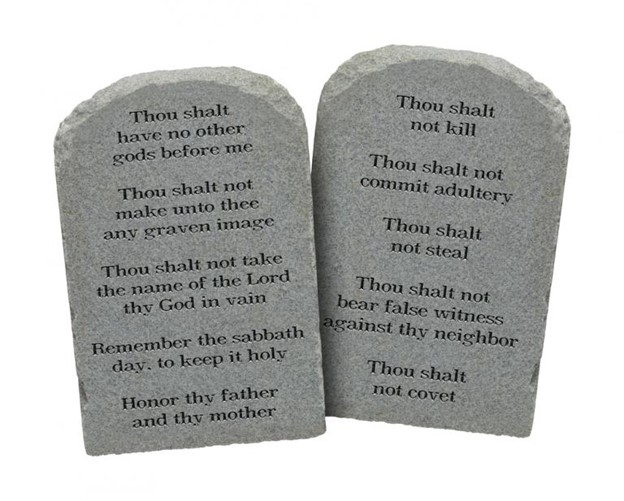
Literally carved into stone was the eighth commandment: You shall not steal. Even though we are encoded from birth with the knowledge that stealing is wrong, God thought it important to tell His chosen people (Israel) that it was a sin to steal.

Sometimes we minimize the seriousness of stealing by considering the value of the thing stolen. Stealing a car IS much more serious than stealing a hammer. Not only is the car more expensive to replace, it serves a greater function than the hammer. However, there is no moral distinction between petty theft and grand theft. Whether classed as a misdemeanor theft or felony theft, wrong is still wrong.

Some may rationalize taking small items of little value such as taking a few grapes to eat while grocery shopping (and not paying for the grapes), or taking office supplies (that won’t be noticed) from work. Yet, the grapes are stolen. The office supplies are stolen. Rationalization is a way of explaining why the stealing was not really that bad.

Sometimes people justify their theft. “Because of all the hard work I put in, the company owes me...” a stapler, a tape dispenser, or a package of TP. Justification is a way of explaining why the wrong action is actually a right action.
Men do not despise a thief if he steals To satisfy himself when he is hungry; But when he is found, he must repay sevenfold; He must give all the substance of his house. 
—Proverbs 6:30-31
Rationalization and justification (as well as sympathy and understanding) do not change the reality of stealing.

Sometimes people steal without taking anything tangible. That’s why there are laws dealing with patents, trademarks, and copyright. When people make copies of materials without making a purchase, it is theft unless permission is given from the producer of that material. Making copies of written material, music, movies, software, etc. that deprive the originator of making a profit is just another way of stealing. No one deserves a pirated copy of a song just because the song artist is a bazillionaire.

Cheating is another way of stealing without taking something tangible.

So, what is God’s expectation?

If you’ve been stealing, stop stealing. 
Or, just don’t steal. 
Is that all?
He who steals must steal no longer; but rather he must labor, performing with his own hands what is good, so that he will have something to share with one who has need. 
—Ephesians 4:28
The solution to stealing is not merely to stop stealing, but rather, to work and earn an income and share with those in need.

Why is stealing sinful? 
All forms of stealing present something that belongs to another as if it belongs to you. Stealing is a lie against reality and it opposes the very nature of God.


Mark Stinnett
March 12, 2023


Friday, March 10, 2023

Adultery: Why Is Sin Sinful?

“Thou shalt not commit adultery.” 

That is the seventh of The Ten Commandments from the old King James Version. For many, that wording sounds holy. Forceful. Absolute!

Why is adultery sinful?

Our word adultery came into the English language from a Latin verb adulterare meaning literally, to alter, but also used to mean, to corrupt. (This Latin word is not connected to the English word adult; nor is it connected to the Greek term that it translates.)

The Greek term for adultery was very specific in its meaning. It referred to a sexual relationship between people who were married, but not to each other. Remember that while the New Testament was written in Greek, the Greek language was used hundreds of years before Christ and across multiple cultures. So, this meaning was not limited to the New Testament.

While every culture forbids adultery, the rules are different and may vary between men and women. For example, at one time ancient Greeks considered adultery to be a secret sexual relationship with a woman without the permission of her master. In many cultures men have been allowed to have sexual relationships with non-married women. Only if his relationship involved a married woman (not his wife) were there consequences.

In early times consequences were carried out by family members since adultery was considered a violation of the family. This was true in Roman society until laws were passed that made adultery a civil offense with consequences carried out by the legal establishment. Consequences varied from fines to revenge (by family members) to death.

Among some groups, cultural norms or laws required the husband whose wife was an adulteress to divorce her (or put her to death). In most cases cultural norms and laws were stricter regarding women since married women were often considered property. They were therefore bound to absolute fidelity in the marriage.

By the time of Christ infidelity among both husbands and wives was common in Roman society. So was divorce.

For the Jews, as with others, adultery involved sexual intimacy only, and divorce was allowed, though the acceptable reasons were debated. Recall that Jesus reminded the Jews that Moses demanded a certificate of divorce because of the hardness of their hearts (Matthew 19:7-8). In other words, husbands had mistreated their wives by discarding them. So, to protect women a legal certificate was required. Men had to have a legitimate reason for divorce and had to produce a certificate indicating that reason.

Jesus ended the debate by pointing back to creation: “But from the Beginning it has not been this way.” Jesus taught fidelity in marriage for both the husband and the wife.

Ideally marriage should reflect the very character of God. The words fidelity, loyalty, commitment, faithfulness and devotion describe God. That means that in His relationships God does not show partiality. He is not fickle in his commitment. He does not tire of love. He does not quickly grow impatient or angry. In order to preserve a relationship God is willing to forgive.

God does not quit a relationship. Even when His wife (Israel) was unfaithful, He was patient and tried to woo her back. (Hosea 2)

Why is adultery sin? Adultery violates faithfulness and commitment, the very character of God. Adultery is sin because it is a lie against the truth of God’s divine nature.


Mark Stinnett
March 5, 2023


Monday, February 27, 2023

Lying: Why is Sin Sinful?

Imagine for a moment that in the creation sequence when God said, “Let the earth sprout vegetation…” marble-size balls of fire were produced instead. When God told mankind to “fill the earth, and subdue it,” what if He really meant for lions to be in charge, as ’king of beasts’ and to subdue man? What would this say about God’s word?

The very essence of truth was established in the creation sequence. When God said, “Let there be light,” the Bible tells us, “and there was light.” The very thing that came from the mouth of God was God’s intention and the result. A person could go though the entire creation sequence and see the same pattern of truth. So, from the beginning, truth was established.

Truth is especially important in relationships. Only through truth is trust built. When a new acquaintance tells his name, it is accepted as true, based on the assumption of mutual trust. As the relationship continues, it grows stronger through consistent truthfulness. Without the confidence of truth in a relationship, the relationship will not survive for long.

In Scripture, God is always true to His word. When He speaks, He speaks truth. There are things that God has not revealed to mankind, yet they are withheld according to His wisdom. So, His revelation to man is true and complete, though it may not be exhaustive. (How could we even understand all that God could reveal?)

In light of God’s intimate relationship with truth, what does he expect of created man?

In short, God expects truth. When we speak, we must speak according to reality.

Esau, the older of the twin sons of Isaac, expected to receive from his father the blessing and the birthright. The birthright was a double-portion of the physical inheritance. The blessing pertained to the future and was prophetic in nature. The oldest son was promised preeminence in the family. Blessings were given in regard to position, rule, dominion, strength, longevity, prosperity and relationships.

Isaac was Abraham’s son of promise and he received both the birthright and the blessing. However when he was old and ready to pronounce the coveted blessing on His son Esau, Jacob stole the blessing from his father by pretending to be Esau.

Later Isaac realized Jacob’s deception. However, the only thing he could say to Esau was, “He shall be blessed.” Isaac could not undo what had been done. He could not take back the things he had said as a blessing to Jacob even though Jacob’s deception was unfair.

Isaac live by a code of truth. Whatever a man spoke, it was regarded as set and unchangeable. That was how he established good character. It was the basic ingredient of integrity . It was how relationships were built and maintained.

People have devised all kinds of ways to hide their lies by using different terminology: deception, half-truth, white lie, clever marketing, loop-hole, etc. Yet, a lie is a lie.

Just as it is with God, man is expected to speak truth. Whenever you or I speak, it should be as firm and representative of reality as God’s word in creation. We must not play games with words to hide lies. A lie hides or obscures truth. It violates the most basic element on which relationships are built.

Why is lying sinful? A lie stands against reality and opposes the very nature of God.


Mark Stinnett
February 26, 2023


Monday, November 7, 2022

Exception-Based Christianity

On one occasion, after I had introduced the concept of probability to my junior high math class, students began quizzing me about the lottery. We first calculated the astronomically small probability of winning with one ticket. The next idea was that of purchasing enough tickets to ensure a win. After two days of exploring the investment in time, labor and money to pull off such a feat, we all agreed that it was next to impossible. And yet, we all marveled that local and national lotteries announced winners. In each case, the winner appeared to be an exception.

The big take-away for my students was that if you really 'expect' to win the lottery, you are boldly (or foolishly) asserting that you think you will be the exception to the huge improbability.
(I don’t think my mathematical proof for the foolishness of speeding was as great a success.)

Young people often live as if they will be the exception. They will not be the one to...
  • Get caught (shoplifting/speeding);
  • Get hurt (diving into dark water);
  • Lose money (on risky investments); or
  • Fail (at an unlikely endeavor).

Life seems to be full of exceptions. Just look! People are winning the lottery all the time!

Let me insert here that the marketing of the exception (intentionally or otherwise) can easily skew one’s sense of reality. So, a person’s keen skills of observation might be based on incomplete or inaccurate information.

So, what does all this have to do with Christianity? Some people carry over into Christianity the same exceptional mentality. In other words, some Christians live as if they will be the exception to the clear teachings found in Scripture.

Let me continue with an example…

Have you ever read Bible verses about lying?

  • Is lying ever approved? Is lying good?
  • A lying tongue is found on a list of things that God hates. (Proverbs 6:17)
  • “Lying lips are an abomination to the Lord.” (Proverbs 12:22)
  • “A false witness will not go unpunished, and he who tells lies will perish.” (Proverbs 19:9)
  • God’s people believed the false prophets but called Jeremiah a liar when he spoke God’s word. (Jeremiah 27, 28, 29, 43) God held them accountable for their foolishness.
  • Jesus referred to the devil as the father of lies. (John 8:44)
  • Lying is explicitly condemned three times in the book of Revelation (21:8, 27; 22:15).
  • It is impossible for God to lie (Hebrews 6:18); it is against His nature.

So, how strong is a defense for lying by pointing to Rahab the harlot who lied about hiding the Israelite spies at the time of Joshua? (See Joshua 2:1-7) Does Rahab the exception teach us that there are times when lying is justified?

Even if we think we can justify Rahab’s lie, it does not justify your lie. Lying is sin. That is the consistent teaching in Scripture.

To teach our children that it’s ok to lie (even sometimes) would be no different than teaching that there is no right and wrong, that life is full of moral exceptions. An exception-based approach to Scripture would inevitably call for a whole new branch of moral instruction on how and when to apply exceptions.

We must not go beyond what is written in scripture. 
Would you risk your soul on a perceived exception???

Think...In what other areas would this kind of reasoning apply?


Mark Stinnett
November 6, 2022


Monday, October 24, 2022

Correct Me, If I’m Wrong

"Correct me, if I'm wrong," he said.

I'm not always sure if a person is sincere when I hear such a comment. After all, I have attempted to correct someone after hearing such a statement, but it did not turn out as I expected.

Here’s wisdom that applies:
Do not reprove a scoffer, lest he hate you,
Reprove a wise man, and he will love you.
--Proverbs 9:8
Have you ever felt that you needed to correct someone, but you were afraid of how they might react? That’s not uncommon. Many folks are non-confrontational, and with good reason. Relationships have become strained or broken when trying to correct another.

No one wants to face the scoffer when he is corrected. It might result in…
  • Anger over being corrected.
  • Denial of a problem and complete refusal of correction;
  • Accusations cast toward the one correcting;
  • Colorful speech in response;
  • A dismissive attitude toward the one offering correction;
  • Excuses to explain (i.e. justify) the behavior.

Because of the potential reaction of the scoffer, many folks prefer not to engage in the correction of anyone, even a wise man.

Yet, what is the outcome when there is no correction? If a person has done wrong but is not corrected, then there are two lies being told:
  • The one who is in the wrong, but refuses correction, behaves as if everything is fine when it is not.
  • The one who refrains from correcting another has hidden the truth out of fear.

Both lies avoid reality.

Solomon gives us insight into the possible outcome of correcting another person. However, we should not assume one thing or another. A gentle revelation of the truth with wise words may reveal a scoffer or a wise man. Either way, you have done right by not hiding the truth.

If you have revealed a scoffer, follow Solomon's advice and avoid correcting him/her in the future. Also remember, even wise men may not enjoy being corrected at first. It might take some time for the wise man to come around. So, don’t be too quick to judge.

Here are a couple of verses of Scripture that may help to encourage correction:
All Scripture is inspired by God and profitable for teaching, for reproof, for correction, for training in righteousness; so that the man of God may be adequate, equipped for every good work.
—2 Timothy 3:16-17
My brethren, if any among you strays from the truth and one turns him back, let him know that he who turns a sinner from the error of his way will save his soul from death and will cover a multitude of sins.
—James 5:19-20
Always approach correction with the right attitude. Correction is not for gloating, setting the record straight or standing in judgment. Correction is for the benefit of another’s soul.

Also, when you are on the receiving end, i.e. the one being corrected, stop talking and listen. It might be that you ARE wrong. It might be that you NEED correction...for the good of your soul.

Be humble.
Be courageous.
Be wise.

Mark Stinnett
October 23, 2022

Wednesday, September 16, 2020

How Important Is Truth To You?

Have you ever had anyone lie to you?

I’m not thinking about practical jokes or being silly. I’m not thinking about bluffing or withholding information, strategies used in some games. I am thinking about someone telling you a lie and expecting you to believe the lie as if it were the truth. Then, you discover the lie! 

What was that like?
How did it make you feel?
How did you feel about the other person?

Lies frustrate us; lies anger us. Lies cost us time, money and effort. Lies weaken relationships.

In the home lies are a cause for strong discipline. Lies create distance between husbands and wives; between children and parents.

A government official who lies can no longer be trusted. A teacher who lies can no longer be trusted. A writer/journalist who lies can no longer be trusted. Betrayed trust causes the liar to become ineffective in his/her work.

I cannot think of anyone who would disagree with the things I’ve just written. Would YOU!?

Let me change the tone and ask: “Is there ever a time when a person is justified in lying?” And just to keep things personal: “In what cases would you want someone to lie to YOU?
  • When your blood work comes back indicating you have diabetes or cancer?
  • When your bank account is overdrawn?
  • When your child is injured at school?
  • When your employer makes a major policy change affecting your position?
  • When a friend hears a rumor about you?
I have heard people defend situations in which it was OK to lie. Yet, when asked, “When is it OK for someone to lie to YOU?” I have never known anyone to produce a list.

An acquaintance of my dad asked him to speak at the funeral of a relative. Dad agreed, but struggled. What could he say? The deceased had been a mean and selfish man. Dad addressed the small crowd that had gathered by first acknowledging that the man had been ‘mean and selfish’ to everyone. Dad recalled seeing the tense audience relax. With a measure of tact, dad had told the truth, and the people were understanding and even appreciative.

People love the truth; people expect the truth. Lies offend, disappoint, confuse and destroy.

One thing that the COVID-19 pandemic has brought to light is that people choose what they believe. Truth exists, though often difficult to discover. Yet, people ultimately choose what they wish to believe, even if it is a lie.

When it comes to the Bible, truth is revealed. Yet, people still choose what they ‘wish’ to believe, even if it is a lie. Some have been deceived by the intellects of our day. Some love the things of this world and desire to pursue them more than pursuing God. Some do not want to admit that their behaviors and attitudes are sinful. Some are indifferent. And for some, getting to the truth is...just...too...difficult.

People hate lies. People love truth. Yet, too often, people choose to believe what they want, even if it is a lie.

Read the following two verses from the Bible. What do these reveal about truth? God? Jesus? Salvation?
The wrath of God is revealed from heaven against all ungodliness and unrighteousness of men who suppress the truth in unrighteousness.
—Romans 1:18  (NASB95)
Jesus said to him, “I am the way, and the truth, and the life; no one comes to the Father but through Me.” 
—John 14:6 (NASB95)
Now, take yourself out of the picture and simply ask yourself, “How important is truth?”


Mark Stinnett
September 13, 2020

Monday, May 6, 2019

A Ferris Wheel of Prognostication*


Yet again, another end time prophecy...Why?

Do you remember what Solomon wrote?
Whatever has happened, will happen again; whatever has been done, will be done again. There is nothing new on earth.
—Ecclesiastes 1:9 (ISV)
Yet another end time prophecy has emerged, and it’s true: I am a scoffer. I scoff at the endless modern day end-time predictions that come and go without being fulfilled. In general these predictions hinge on human assumptions and speculative reasoning not rooted in God’s word.

Quite by accident I stumbled across a modern-day prophecy claiming that the ‘rapture’ will begin “no later than May 14, 2019.” The rapture, according to this prophet, is the return of Jesus to set up a temporary earthly kingdom.

My heart is heavy as I wonder about all those who have given up on the Bible because of false prophets. I intend no disrespect, but I can find no other accurate description: False prophets.

Did you know that God had something to say about those who speak falsely in His name?
Whenever a prophet speaks in the name of the Lord, and the oracle does not come about or the word is not fulfilled, then the Lord has not spoken it. The prophet will have spoken presumptuously, so you need not fear him. 
—Deuteronomy 18:22 (ISV)
God gave these instructions to ancient Israel after He delivered them from Egypt. There were some who prophesied, but the people did not have the complete word of God (the Bible) to evaluate the prophecy. So, they were literally instructed to ‘wait and see.’

Some people today are twisting the word of God to satisfy their personal obsession with the calculation of the return of Christ. They have unwittingly taken Truth and cast it as a lie. Then when the predicted date comes and goes without fulfillment the prophet is shown to be a false prophet. Yet, he/she has helped to build a case against the truth and relevance of God’s word. God reveals His attitude toward liars:
Here are six things that the Lord hates— seven, in fact, are detestable to him: Arrogant eyes, a lying tongue, and….
—Proverbs 6:16–17 (ISV)
The list goes on, but the point is that God hates “a lying tongue.” God’s language is strong. This is something He actually hates.

These false prophets spend countless hours trying to unravel riddles of presumed signs while completely overlooking (or ignoring) the obvious thundering message from God: Get ready!

All prophecy in the Bible that looks forward to God’s judgment, whether directed to ancient Judah concerning their idolatry, or to the Jews at the time of Jesus concerning the destruction of Jerusalem, or to Christians concerning the end of the world; all judgment prophecy has one simple message: Get ready!

A person gets ready by first turning to Jesus. Those who have already devoted their lives to Christ get ready by giving careful attention to God’s inspired word.

The ‘Ferris Wheel of prognostication’ will continue to go ‘round and ‘round with endless prophecies that fail. Don’t be distracted. Don’t listen. Don’t worry about their predictions. And above all, don’t forget the crystal clear instructions in God’s word about the return of Christ: Be Ready!

Mark Stinnett
*Prognostication: The foretelling of things based on signs.

Thursday, December 29, 2016

Self-Devastation


Do you remember the first time you lied and you got away with it?

Do you remember when you were finally convinced that lying just wasn’t worth it?

I do not know whether either of these questions apply to you. However, it is likely that you know someone that lies and seems to get away with it. No conscience. Lying is simply a part of life.

I worked with a man who, just a few days before retirement, advised a young coworker, “Never admit that you are wrong; never admit a mistake.” (Translation: Lie to cover your mistakes.)

What the older man did not realize is that everyone already knew. He could not hide all his mistakes, so everyone knew that he lied. He had no conscience and no integrity. No one really cared that he retired (except, perhaps, his wife).

How foolish we are to think that we will really get away with our lies.

     A false witness will not go unpunished, 
     And he who tells lies will not escape.
     --Proverbs 19:5

We have a number of words in the English language to describe lying. It does not matter what word is used; it does not matter how subtle the lie or how minor its impact. A lie is a lie.

I wonder if the most devastating lie is the one we tell ourselves...that it really does not matter!

Thursday, April 28, 2016

Counterbalance

A false balance is an abomination?...Really?

That seems a little extreme, but that is what we read in Proverbs 11:1. Perhaps it is worth a second look.

Abomination:
An abomination is something that God hates, but stronger than hate. In the Old Testament idolatry is often described as an abomination to God. That places the ‘false balance’ in the same category with idolatry. Does God really hate a ‘false balance’ as much as he hates idolatry? It is really that serious?

Balance scales: You’ve seen a balance scale; you know how it works. An object of unknown weight is placed in a pan on one side of the balance scale. In the pan on the opposite side known weights are added until the two pans balance. The unknown weight is then known: It is the sum total of the known weights . . . unless someone has tampered with the weights or the balance scale.

A False Balance: A false balance is just another way of telling a lie. A false balance changes the appearance of things making two unequal things appear to be equal. God hates lies. Lies oppose the very nature of God.

It's all a lie: You might say that all sins are lies:

The idolater calls to his ‘god’. But deity is not made of created things: wood or stone; gold or silver; possessions, fame, entertainment or pleasure. The 'idol' is a lie.

A thief possesses things that he does not own, yet he thinks of them as his own and lets others think they are his own. A lie.

A man has a sexual relationship with a woman with whom he is not married. Yet, that behavior makes it appear as though they were married. A lie.

In prideful arrogance a man elevates himself to a position of importance that is not truly his. He lies to himself.

A murderer assumes authority over life and death, a position held by the Creator. The murderer lies.

A teen disobeys or dishonors mother or father. In doing so the teen brings his mother and father to his own level as if they were equals or as if he has greater authority. That’s a lie.

The Christian wears his ‘Sunday face,’ piously meeting with other Christians to worship. He does many religious acts of worship, but does not offer his heart in devotion to God. Liar!

------------------------

There are many ways to lie, many without ever moving one’s lips. God hates them all. 
Lies are an abomination!

A false balance is an abomination to the LORD,
But a just weight is His delight.
                                                            --Proverbs 11:1

May our thoughts, and our words, and our behaviors always balance with the truth.

Monday, April 4, 2016

Rethink 'Wink'


It was springtime during my sixth grade year. After considerable thought and planning I did it. I winked at the cute little dark-haired girl in my class!

Years later I learned that it was called non-verbal communication. I had no idea that I was capable of such sophistication! The ‘wink’ in sixth grade meant, “I like you.” The thing that was so confusing later on was that I had been winked at by adults and “I like you” just didn’t always make sense. So, using my kid-powered deductive reasoning skills I decided that winking was some kind of code, but I had no idea what it meant.

As a teen, I saw the wink again. An uncle of mine was playing a harmless prank on one of my younger cousins. That time I understood the wink, “Don’t say anything; play along.”
We all had a big laugh afterward.

I finally understood: The wink communicates when the mouth is closed. The wink can also communicate when the mouth speaks. Solomon observed that the wink may tell the truth while the mouth tells a lie.

A worthless person, a wicked man, 
    Is the one who walks with a false mouth,
Who winks with his eyes, who signals with his feet, 
    Who points with his fingers;
Who with perversity in his heart devises evil continually, 
    Who spreads strife.
                                                --Proverbs 6:12-14

A person says one thing with his mouth, but he communicates a different message by non-verbal signals; a wink, shuffling of the feet, pointing the fingers. God has an opinion about that individual:
     Worthless.
     Wicked.
     Liar.

Solomon did not condemn non-verbal communication. The "I like you" wink is innocent. A head-nod, motion of the hand, and the “stink eye” are often effective means of communication used by parents and teachers. Solomon warned against using deceptive signals to cover a lie. He described a subtle and evil manipulation that ultimately causes strife. Don’t think this is just for kids. God hates the “one who spread strife among his brothers.” (v. 19)

In the Sermon on the Mount Jesus instructed his followers to say, “Yes,” if they mean “Yes,” and to say, “No,” if they mean “No” (Matthew 5:37). In other words, speak the truth or say nothing at all; no verbal manipulation; no deceit; no lying; and no subtle silent signals.

Tell the truth.
(No Wink.)