Showing posts with label sin. Show all posts

Sunday, June 15, 2025

My Grandpa’s Naïve Generation (chuckle)

We both chuckled when I shared some of the game rules my mom had grown up with. My grandpa would not allow his kids to use dice, so they had to make their own spinner when moving game pieces around the Monopoly board. My mom and her siblings were also forbidden the use of 'spot' cards (the kind with spades, hearts, clubs and diamonds). Dice and spot cards were the tools of gambling, a practice considered morally wrong by my grandparents. The thinking of my grandpa’s generation seemed naïve. We chuckled.

Then, my friend, looking upward and tapping his chin with his forefinger, paused and thoughtfully said, “You know, those folks were really serious about not sinning.”

I was taken back by his statement because I had only thought of their behavior as uninformed and silly. I had never considered the possibility that they were consciously trying to avoid sin.

My friend went on to explain his understanding of my grandparent’s generation. He told me that their guiding principle came from scripture:
Abstain from all appearance of evil.
—1 Thessalonians 5:22 (KJV)
Modern translations have: “Abstain from every form of evil” or “Reject every kind of evil.”

The point is that their generation was intent on following Scripture in order to practice godly living in their daily lives. Even though I personally see nothing wrong with using dice or spot cards, I certainly admire such an attitude toward godly living.

Moral tolerance, soft doctrine, and benevolence are the fashion trends in today’s Christian community in the United States while godliness, holiness and purity have taken a back seat. Topics such as righteousness, truth and sound doctrine are too often thought to generate arguments. For that reason, they are avoided. The result is a religious environment that extends a generous hand to those with physical needs (though not as effectively as secular charitable organizations) while tolerating “every form of evil.”

Generosity, service and benevolence are good. However, godliness, purity and holiness are not to be ignored:
Who may stand in His holy place? He who has clean hands and a pure heart, who has not lifted up his soul to falsehood and has not sworn deceitfully. 
--Psalm 24:3-4
You shall be holy, for I am holy. 
--1 Peter 1:13
For God has not called us for the purpose of impurity, but in sanctification. 
--1 Thessalonians 4:7
Blessed are those who hunger and thirst for righteousness, for they shall be satisfied. 
--Matthew 5:6
He made Him who knew no sin to be sin on our behalf, so that we might become the righteousness of God in Him. 
--2 Corinthians 5:21
He must turn away from evil and do good; he must seek peace and pursue it. 
--1 Peter 3:11
We must indeed love one another by extending benevolence and service and we must also devote ourselves to God in righteousness and purity and holiness.

And that’s no laughing matter in any generation.


Mark Stinnett

June 15, 2025


Sunday, June 8, 2025

What's the Problem with Sin?

Have you ever wondered why sin is like a runaway train; why sin is so difficult to stop?

You might think that this blog will be about how terrible and repulsive sin is. And yet, that is the problem. If everyone thought sin was so terrible, they would avoid it. If the sin in your life was repulsive to you, you would turn away every time. You would treat it like a food that you hate.

Here’s an explanation about sin that we might not think about often…
Let no one say when he is tempted, “I am being tempted by God”; for God cannot be tempted by evil, and He Himself does not tempt anyone. 
--James 1:13
Simply put, God is not to blame for your temptation. And here's the reason:
But each one is tempted when he is carried away and enticed by his own lust. (v. 14)
The simple truth is that temptation originates within a person. The old illustration of dangling a carrot in front of a donkey to make him move forward is relevant. The donkey desires the carrot. Yet, dangle a carrot in front of some people and you will only annoy them.

You can wave money in front of someone who does not lust for money (i.e., desire money) and it will not be a temptation. In contrast, a money-lover is easily distracted by the mere mention of money.

When a woman who is dressed inappropriately walks by, why do most men look, even stare, while only a few look away? Within the lookers is a desire to look and perhaps even more. Yet within the man who looks away is a desire to avoid temptation. Yes, he knows that if he looks, he can be drawn away. Within him is a deeper desire for purity of thought and action.

Many sins, perhaps most, begin with temptation, which in turn, begins with a desire that already exists within. Without thinking about it, we like to satisfy our desires. We want to give in to the things that appeal to us. Sin caters to our desires. Sin employs the tremendous marketing tool of offering you everything you desire...everything. The temptation is the inner urging that presents a potential opportunity to satisfy. Sin is full-grown temptation that takes action. Or, as James put it:
Then when lust has conceived, it gives birth to sin; and when sin is accomplished, it brings forth death. (v. 15)
The problem with sin is that it sets itself up as a satisfaction machine. “Simply give in to your desires.” But wait! What does sin ever do for you?

Sin makes many promises but cannot fulfill them. Sin is a master marketing agent promising satisfaction or happiness or whatever else you think the fulfillment of your desires will bring. Sin always says "yes" to your desires. Sin rallies in favor of giving in to temptation. Sin is always on your side to agree with your rationalization for giving in, or your justification for why giving in to temptation makes more sense than self-control.

Sin cheers you on to follow your dreams, to give in to your desires, to embrace your lust. Sin promises. Sin deceives. Yet, sin only brings death.
Do not be deceived my beloved brethren. Every good thing and every perfect gift is from above, coming down from the Father of lights…. (vv. 16-17)
Sin is never good. Sin deceives one's senses and mind and heart. 
Sin IS terrible. 
Sin IS repulsive. 

Is it time to reevaluate your desires?


Mark Stinnett

June 8, 2025


Monday, April 28, 2025

The Struggle Is Real!

Perhaps you recall the scene prior to David facing Goliath. The Philistine army stood on one hill across a valley opposite the Israelite army. Each army had a hero, but only the Philistine hero came into the valley.

Goliath stood more than nine feet tall, a giant among men. He approached the Israelites and taunted them. He called for their hero to engage in personal combat. His boast was if Israel’s hero killed him, they would serve Israel; but, if he was victorious, Israel would serve the Philistines.

Day after day, morning and evening, for forty days Goliath came out and taunted Israel; and day after day after day Israel sent no response. Their soldiers were afraid; even their hero, King Saul, was afraid. Forgetting God’s victories in the past, King Saul and his army were paralyzed by the intimidating giant. They reasoned correctly that no one was strong enough to win a battle against Goliath.

Surely King Saul wanted to face Goliath, but he could not overcome his fear. Surely there were other soldiers who wished they could face Goliath, but they also were defeated in their spirits. Knowing the certainty of Goliath’s strength Israel stood helpless, defeated, and miserable.

This scene accurately portrays the human struggle against sin. In Romans 7:15-19 the Apostle Paul described the sin that looms in our lives as a power that cannot be conquered by our own strength. Like Goliath, the guilt of sin taunts us morning and evening, day after day after day. The human struggle is the desire to do what is good and right, but being unable to accomplish it. In contrast, we end up doing the very things we do not want to do. Paul described our plight: “O wretched man that I am!”

The Greek term wretched carries the idea of total exhaustion from hard labor. Isn’t that descriptive of our plight? With great effort and strength of will we struggle to overcome sin. Yet, in the end, sin is the victor. Sin comes in the strength of Goliath.

When King Saul and his soldiers saw Goliath taunt them each morning and evening, they looked with fleshly eyes and saw a giant. They could not look beyond their own weakness for God’s help. So it is with sin. When we see sin as a giant that we cannot possibly conquer, we are right.

David, the young shepherd boy, had been victorious over both lion and bear. His victories were not by his own strength but with the strength of God. As he assessed Israel’s predicament, he reasoned by faith that God would give this heathen giant over to him just as he had given over the lion and the bear. David did not place his confidence in the solutions of man, that is, the soldier’s armor. He placed his faith in God alone.

When the guilt of sin looms over us like a giant, do we numb ourselves with drugs (illegal or prescription)? Do we attempt to soothe our demons with our music or games or entertainment? Do we hide behind duty in our career? Do we escape through yet another vacation or weekend getaway?

Or, do we stand in the strength of the Lord placing our faith in his promises, trusting in His strength to overcome?

The human struggle against sin is felt by those who are in Christ. And yet, the struggle must be met on God’s terms, not with our own strength:
Be strong in the Lord and the strength of His might. 
--Ephesians 6:10
How do we do this? How do we find the strength of the Lord? Remember, He has given us His Spirit in which we cry out, “Abba! Father!”


Mark Stinnett

April 27, 2025

Monday, April 21, 2025

The Last Doughnut?

I usually skip breakfast on Sundays, but one Sunday morning I found a box of doughnuts on the countertop in the kitchen. I am a ‘meat and potatoes’ kind of guy, so I can pass up doughnuts. But there it stared at me through the clear cellophane panel, my favorite.

I indulged.

Bite after bite I enjoyed the sweetness; the perfect combination of frosting, filling, and fried dough...washed down with an ice-cold glass of milk. Ahh.

I don’t usually sit around thinking about what I’ve eaten, but that day I did. All morning long the doughnut sat in my stomach like a rock. It was tasty but only for a moment. It was filling, but not satisfying. My system was just not used to so much sugar, so the doughnut kept distracting me.

I thought about how compelling the taste was, yet how disappointing the overall result. In fact, the only benefit was the immediate and temporary taste experience.

I thought about how impulsive I had been. It often seems exciting to be impulsive. Yet, being impulsive is really nothing more than feeding an inner desire without thinking.

The more I reflected, the more disgusted I was with myself for lacking self-control. I came to a point in my thinking where the very thought of a jelly-filled doughnut was distasteful!

I am not angry with myself (or doughnuts), but I am determined not to allow myself to be fooled again. My decision is not rash or impulsive, but I don’t want to feel that way again. That might have been my last doughnut.

You can probably guess where this is going. Replace the word doughnut with sin and adjust some of the details.

Do you see the connection to the sweet desirable taste of sin? The sweet taste masks the deception. The taste is often very real and very sweet and very gratifying. Yet, the taste promises that the sweetness of sin WILL last, WILL bring happiness, WILL provide some kind of benefit. Yet, it is a deception. Sin destroys...always!

Satan wants us to focus on the taste and act on impulse. He doesn’t want us to think about the emptiness of sin. He doesn’t want us to remember past shame and guilt. He doesn't want us to think, just act.

Which past sin truly satisfied you? For which past sin did you later look back and find yourself thrilled with your impulsiveness?

If you sat and thought about a particular sin, I wonder if it would begin to make you feel sick to the stomach. I wonder if you would begin to find it repulsive. I wonder if the sweetness would lose its lure.

I wonder if it is possible for us to see sin for what it really is and come to the point that there truly is ‘the last sin’; not because we ran out of time in life, but that our desire for the sweet taste of sin has died.
Do not let sin reign in your mortal body so that you obey its desires.
What benefit did you then reap from those things that you are now ashamed of? For the end of those things is death.
For the payoff for sin is death, but the gift of God is eternal life in Christ Jesus our Lord.
--Romans 6:12, 21, 23 (The NET Bible)


Mark Stinnett

April 20, 2025


Monday, April 7, 2025

The Good Son

The Parable of the Good Son might not ring a bell because I am actually referring to the older son in the Parable of The Prodigal Son (Luke 15). The prodigal son asked for his inheritance, left home, lived a riotous life, and then returned home begging for a job as a slave. He was accepted back by his loving father as a son. The lesson is about God’s mercy for the lost person who returns to God. The older son stayed home. He was the good son.

The older son went about his work day after day, just a good son should. There was one day, however, that was remarkably different. He returned to his father’s house to hear what sounded like a celebration…. It was a celebration!

One of the servants told him that the celebration was for his younger brother who had returned home. The fattened calf, normally set aside for a an important guest, had been slaughtered for the feast. At this news the older son boiled with anger! HE had not made poor choices in life, not like his younger brother. It was not enough that his younger brother had returned home, they were throwing a party! Anyone would be angry! How insensitive.

Have you ever felt like that? Have you ever found yourself doing what you were supposed to be doing, yet you were overlooked or taken advantage of? Life’s inequities can often arouse anger. After all, hard work and dedication should be rewarded. Excellence should be rewarded. Personal sacrifice should be rewarded. Honesty and integrity should be rewarded.

In many respects the older son had every right to be angry. The younger son had disrupted the family enterprise. It was not simply a matter of taking money from the family’s savings account. Livestock and property were probably sold in order give the son his part of the inheritance. In addition, the family name was undoubtedly tarnished.

Perhaps the greatest inequity was that the foolish younger son had made his way back home and expected something more. A person could easily reason that the younger son was leeching off the older brother’s share of the estate.

Sometimes Christians feel a sense of anger toward fellow Christians who have wandered away from Christ but later returned. The younger son is a picture a Christian who has chased after a life of sin for a time, but later returned home to Christ. The foolish younger son should have known better, just as every Christian should know better than to leave Christ.

The older son displayed an attitude of arrogance. He had accepted his brother’s exit from the family and had effectively forgotten him. Now, he felt that the celebration for his brother’s return was unfair. It was unfair because of his brother’s sin AND because of his own righteousness. In HIS righteousness HE deserved better than his sinful brother. When a Christian is angry about the return of an erring Christian the same arrogance may appear.

The father said to the older brother: “My child, you have always been with me, and all that is mine is yours.” However, the older brother could not see that all the wonderful blessings he enjoyed from his father. It is possible for Christians to have the same blindness. Yet, blessings in Christ abound for every Christian.

The selfish arrogance of the older brother had displaced something. What was missing?

Earlier in Luke 15, a shepherd left ninety-nine sheep that were safe to go in search of his lost sheep. A woman went to great effort to find her lost coin. Yet, who went in search of the prodigal son, that is, the lost brother.

When a fellow Christian rebels and turn from God we should respond with compassion and stive to restore the severed relationship.

May God destroy in us any jealousy or arrogance that would displace our compassion for our brother who errs.


Mark Stinnett

April 6, 2025


Monday, August 5, 2024

Distracted by the Headlines

Taking a break from my studies I walk laps in the auditorium, music from my phone playing in the background. I am lost in thought, distracted.

Social media has exploded with comments about the pro-LGBTQ display during the opening ceremonies of the 2024 Olympic Games in Paris. Some defend, some condemn, some say, “Just watch the games,” and others, “If you don’t like it, don’t watch.” And still others have mixed the parading figures in the opening ceremonies with prophetic imagery from Revelation and declared…. 
(I don’t know what they are declaring. I didn’t listen long enough to find out. I didn’t have to; I didn’t want to.)

Much like the unexpected display in Paris was an unexpected event at the time of Jesus. The Roman governor Pontius Pilate mixed the blood of some Galileans with pagan sacrifices. Some Jews came to Jesus to ask His opinion of this startling headline news. His answer:
“Do you think that these Galileans were worse sinners than all other Galileans, because they suffered in this way?”
—Luke 13:2 (ESV)
Jesus’ question made His listeners think about God’s judgment. It was a way of asking whether the Galileans who died had received divine judgment at the hand of Pilate for being worse sinners. In reality, all sinners are worthy of divine judgment. Then, Jesus continued…
No, I tell you; but unless you repent, you will all likewise perish.” (v. 3)
Jesus redirected their focus from the headline news of the day to their individual response to God. They needed to change their way of thinking (repent), or they would perish, i.e., die in their sins, just like those Galilean sinners.

We need to stop reacting to headline news; we need to stop focusing on the inequities of life.

Recall what the Apostle Peter wrote:
Beloved, do not be surprised at the fiery trial when it comes upon you to test you, as though something strange were happening to you.
—1 Peter 4:12 (ESV)
Peter was trying to prepare the early saints for persecution, something far worse than being offended by a public display interpreted as ungodly. Why would it be strange that a group/ organization that promotes the glorification of human achievement does not honor God?

Saints, do not be naïve! 
We cannot expect those who do not know Christ to act like Christ! Stop reacting to headline news and the inequities of life. Stop living with your head in the sand engaged in things elsewhere in the world, things over which you have no influence or control. 
Pray? Yes! But wake up!

The words of Jesus echo through the centuries, “Repent!” We must focus our minds on the current year, our current place of residence, and the circumstances surrounding our individual lives. We each need to focus on the kingdom of God. There will be yet another headline tomorrow, another great injustice, another offense. And there will be, for some, true persecution for doing good and standing for Jesus.

On the great day of judgment God’s interest will have nothing to do with your opinion of the questionable things that have occurred on the earth. He will want to know whether you pledged your allegiance to Jesus; whether you remained faithful to Jesus; and whether you went through each day striving to be holy and striving to do good. 

Refocus!


Mark Stinnett
August 4, 2024

Monday, July 29, 2024

Getting Things Off Your Chest

Do not be like the horse or the mule, 
which have no understanding 
but must be controlled by bit and bridle 
or they will not come to you. 
—Psalm 32:9
This verse is among a trio of verses in which David reflected on God’s instruction and counsel. The horse and mule are used to illustrate the wicked individual who stubbornly refuses to listen. For all the good in horses and mules, they are beasts that have no desire to work or to transport a rider. To be useful, they must be controlled by bit and bridle.

Can you see how this is an accurate description of those in rebellion to God? We exist in a world in which many people simply want to do things their own way by throwing off all restraints. The result is the removal of any sense of right and wrong. As this philosophy of life is played out, people are hurt and lives are destroyed. Like the horse and mule the only way to control someone with such an unrestrained lifestyle is imprisonment, a type of bit and bridle for humans.

In contrast David began this Psalm:
Blessed is he whose transgressions are forgiven, 
whose sins are covered. (v. 1)
He told how his body had wasted away because of the ever-present guilt of sin in his life. He described feeling the heavy hand of God at all times. Even his physical strength was sapped from his body. His description sounds like the symptoms of severe depression.

Have you ever felt the pressure of sin like David? Sin is oppressive; it ruins lives. Oh sure, we recognize the effects of the big sins: capital crimes, repulsive sexual immorality, bold rebellious sins. Yet other sins are more private and do not seem to be as serious because no one else knows. So we believe that we can just move on and it will all fade into the past.

In reality, sin, even private sin, weighs us down. We feel guilt. It is as if we have lost control. In truth sin has its own bit and bridle. It will literally take control of you and rule your life.

Our society believes in “getting things off your chest.” That is, at least in part, the function of much of the counseling that goes on today. Undoubtedly, that seems to help. It does feel better to be able to talk to someone, to share your burdens. But let me ask you a very serious question. Be completely honest.

What good does it really do? Does it really help?
Perhaps you answered, “Yes.”

Why, then, is it only temporary? Why is there another counseling session to be scheduled? Why does the weight of the burden return?

When there is sin in one’s life, the hand of God is the source of that heavy burden. There is no man that can take that off your chest. Listen to David’s words:

Then I acknowledged my sin to you 
and did not cover up my iniquity. 
I said, “I will confess my transgressions to the Lord” – 
and you forgave the guilt of my sin. (v. 5)
When sin has control of your life you will feel its effect. You may discover times when sin causes you to feel depressed. That weight is the hand of God.

The only real and lasting solution is to throw yourself at the feet of God with an open heart confessing your sin. He will forgive your sins and remove his heavy hand. What a relief it is to get things off your chest by going to God in prayer.


Mark Stinnett
July 28, 2024

Thursday, March 30, 2023

Why Is Sin Sinful?

Have you ever known anyone who didn’t like the idea that a specific sin was called sin?

You might have heard someone say, “I don’t see anything wrong with it.” That may be because of simple ignorance. (Ignorance just means that a person is without knowledge.)

Sometimes people acknowledge sin, but explain that it was actually the right thing to do. For example, they lie to protect a friend. The sin was for a good reason, so it should be dismissed without normal consequences. It is something known to be bad but is turned into something good by using lots of words. This is called justification.

At other times people explain why a sin is not really sin. They may claim that they were forced into a situation or they were born with a genetic tendency, so they should not be held responsible. This is called rationalization. It is another use of lots of words to explain one’s sin.

Sin is still sin…
  • Even if a person uses a different standard;
  • Even if a person is ignorant;
  • Even if a person justifies the sin; and
  • Even if a person rationalizes the sin.

Sometimes people speak and act as if God arbitrarily concocted a list of things to call sin. It is like odd 'house rules' that some children have grown up with. For example, my grandfather would not allow his children to use a regular deck of playing cards or dice. I knew a fellow who was forbidden to shoot a game of pool. Another friend was told to never play pinball (a pre-video game device).

While some or all of these may sound arbitrary, I know that there were legitimate reasons. Yet, unless you understand the reasons, the prohibition of these activities may sound silly with no meaningful connection to reality: “How could there possibly be anything wrong with rolling dice!?”

Some people see various sins in the Bible the same way—arbitrary. So, they are likely to deny the sinfulness of sin, plead ignorance, justify or rationalize the sin. However, the Apostle Paul reveals something about all sin. He wrote that all ungodliness and unrighteousness (sin) suppresses the truth. (Romans 1:18)

Why is sin sinful?
Sin is a lie against truth. Sin opposes reality.
What does that mean?

Sin stands in opposition to the nature of God and His work in creation. At the end of the creation sequence God saw that it was very good. (Genesis 1:31) You might say that God and creation were in harmony. Although God had created something that was inferior to Him, it was not bad or evil, but compatible.

However, when Adam and Eve sinned, they took it upon themselves to decide what was good for themselves. They suppressed the truth that existed by virtue of God’s existence and creation. They elevated themselves above God by ignoring His instruction.

When Cain killed Abel, he placed himself in the seat of judgment over another human being. He made a decision to take a life, yet without having been the one who gave life. His action suppressed the truth of the sanctity of life and the truth that God is creator of life and judge of all.

People often become angry when sin is revealed because they desire to do the thing they desire. They selfishly wish to be their own god. So, in one way or another, all sin suppresses the truth of God and His design of the created world.

Sin is not arbitrary.
Sin is not just made up.
Sin is a lie against the truth.


Mark Stinnett

March 26, 2023


Monday, March 20, 2023

Disobedience to Parents: Why is Sin Sinful?

Because I was the preacher, the request came to me. A grandmother requested that someone visit her grandson who was in the county jail.

He had committed a crime. And yet, no one faulted that grandmother for her love and concern for her grandson. Even though he was in jail, and she was not blind to his crime, she did not want to characterize him in any other way.: “He’s a good boy,” she said.

Sometimes parental love casts a veil over the eyes. Some parents do not see their children through the lens of reality. Regardless of what they do or say, the parent overlooks or minimizes their children’s bad attitudes and behavior.

I know of no parents who want to admit that their children do wrong as they grow older. I’d rather address this subject in general terms by saying, We all know it’s true; we are all sinners. (That includes my kids without naming them.)

Parents of younger children need to take notice. There will be a time at which each of your children will be old enough to be held personally accountable to God for his/her sin. So, as much as we do not like to think about it, we need to think about it. Our kids grow up to be sinners.

Solomon encouraged his sons over and over to listen! For example:
Hear, my son, your father’s instruction And do not forsake your mother’s teaching.
—Proverbs 1:8
Listen to your father who begot you, And do not despise your mother when she is old. 
 —Proverbs 23:22
Turning to the New Testament we find:
Children, be obedient to your parents in all things, for this is well-pleasing to the Lord.
—Colossians 3:20 (See also Ephesians 6:1.)
With these and many other positive teachings comes a strong admonition from the Apostle Paul. He reminded parents and children that disobedience to parents is an ungodly behavior that will result in God’s wrathful judgment. (Romans 1:30 and 2 Timothy 3:2).

Consistent disobedience in a child is a sign that God’s authority structure in the home is misunderstood or simply not honored. In too many homes, far too many Christian homes, children are allowed to dictate the terms of obedience. Through temper tantrums, angry attitudes, disrespect, whining, and manipulative techniques children turn the tables making their parents obedient to them.

And yet, it is reasonable for children to be obedient to their parents:
  • Parents are better positioned (job, finances) to provide for their children’s needs.
  • Parents are better equipped physically to care for their children.
  • Parents are smarter (at least for a while).
  • Parents are more experienced in life.

Aside from simple reasoning we must understand that God designed the home and assigned parents authority over their children.

When God’s authority structure is followed children learn how to respect authority (another of God’s expectations). But of utmost importance, children learn to honor God’s authority.

Why is disobedience to parents sinful?

When children are disobedient to their parents they have taken authority away from their parents. Both children and parents are living a lie against reality. By not upholding God’s authority structure in the home they have disregard God and His divine authority.


Mark Stinnett
March 19, 2023


Friday, March 10, 2023

Adultery: Why Is Sin Sinful?

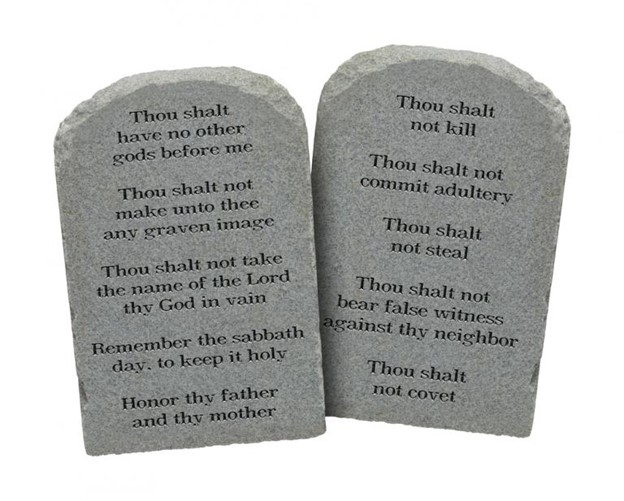
“Thou shalt not commit adultery.” 

That is the seventh of The Ten Commandments from the old King James Version. For many, that wording sounds holy. Forceful. Absolute!

Why is adultery sinful?

Our word adultery came into the English language from a Latin verb adulterare meaning literally, to alter, but also used to mean, to corrupt. (This Latin word is not connected to the English word adult; nor is it connected to the Greek term that it translates.)

The Greek term for adultery was very specific in its meaning. It referred to a sexual relationship between people who were married, but not to each other. Remember that while the New Testament was written in Greek, the Greek language was used hundreds of years before Christ and across multiple cultures. So, this meaning was not limited to the New Testament.

While every culture forbids adultery, the rules are different and may vary between men and women. For example, at one time ancient Greeks considered adultery to be a secret sexual relationship with a woman without the permission of her master. In many cultures men have been allowed to have sexual relationships with non-married women. Only if his relationship involved a married woman (not his wife) were there consequences.

In early times consequences were carried out by family members since adultery was considered a violation of the family. This was true in Roman society until laws were passed that made adultery a civil offense with consequences carried out by the legal establishment. Consequences varied from fines to revenge (by family members) to death.

Among some groups, cultural norms or laws required the husband whose wife was an adulteress to divorce her (or put her to death). In most cases cultural norms and laws were stricter regarding women since married women were often considered property. They were therefore bound to absolute fidelity in the marriage.

By the time of Christ infidelity among both husbands and wives was common in Roman society. So was divorce.

For the Jews, as with others, adultery involved sexual intimacy only, and divorce was allowed, though the acceptable reasons were debated. Recall that Jesus reminded the Jews that Moses demanded a certificate of divorce because of the hardness of their hearts (Matthew 19:7-8). In other words, husbands had mistreated their wives by discarding them. So, to protect women a legal certificate was required. Men had to have a legitimate reason for divorce and had to produce a certificate indicating that reason.

Jesus ended the debate by pointing back to creation: “But from the Beginning it has not been this way.” Jesus taught fidelity in marriage for both the husband and the wife.

Ideally marriage should reflect the very character of God. The words fidelity, loyalty, commitment, faithfulness and devotion describe God. That means that in His relationships God does not show partiality. He is not fickle in his commitment. He does not tire of love. He does not quickly grow impatient or angry. In order to preserve a relationship God is willing to forgive.

God does not quit a relationship. Even when His wife (Israel) was unfaithful, He was patient and tried to woo her back. (Hosea 2)

Why is adultery sin? Adultery violates faithfulness and commitment, the very character of God. Adultery is sin because it is a lie against the truth of God’s divine nature.


Mark Stinnett
March 5, 2023


Monday, February 27, 2023

Lying: Why is Sin Sinful?

Imagine for a moment that in the creation sequence when God said, “Let the earth sprout vegetation…” marble-size balls of fire were produced instead. When God told mankind to “fill the earth, and subdue it,” what if He really meant for lions to be in charge, as ’king of beasts’ and to subdue man? What would this say about God’s word?

The very essence of truth was established in the creation sequence. When God said, “Let there be light,” the Bible tells us, “and there was light.” The very thing that came from the mouth of God was God’s intention and the result. A person could go though the entire creation sequence and see the same pattern of truth. So, from the beginning, truth was established.

Truth is especially important in relationships. Only through truth is trust built. When a new acquaintance tells his name, it is accepted as true, based on the assumption of mutual trust. As the relationship continues, it grows stronger through consistent truthfulness. Without the confidence of truth in a relationship, the relationship will not survive for long.

In Scripture, God is always true to His word. When He speaks, He speaks truth. There are things that God has not revealed to mankind, yet they are withheld according to His wisdom. So, His revelation to man is true and complete, though it may not be exhaustive. (How could we even understand all that God could reveal?)

In light of God’s intimate relationship with truth, what does he expect of created man?

In short, God expects truth. When we speak, we must speak according to reality.

Esau, the older of the twin sons of Isaac, expected to receive from his father the blessing and the birthright. The birthright was a double-portion of the physical inheritance. The blessing pertained to the future and was prophetic in nature. The oldest son was promised preeminence in the family. Blessings were given in regard to position, rule, dominion, strength, longevity, prosperity and relationships.

Isaac was Abraham’s son of promise and he received both the birthright and the blessing. However when he was old and ready to pronounce the coveted blessing on His son Esau, Jacob stole the blessing from his father by pretending to be Esau.

Later Isaac realized Jacob’s deception. However, the only thing he could say to Esau was, “He shall be blessed.” Isaac could not undo what had been done. He could not take back the things he had said as a blessing to Jacob even though Jacob’s deception was unfair.

Isaac live by a code of truth. Whatever a man spoke, it was regarded as set and unchangeable. That was how he established good character. It was the basic ingredient of integrity . It was how relationships were built and maintained.

People have devised all kinds of ways to hide their lies by using different terminology: deception, half-truth, white lie, clever marketing, loop-hole, etc. Yet, a lie is a lie.

Just as it is with God, man is expected to speak truth. Whenever you or I speak, it should be as firm and representative of reality as God’s word in creation. We must not play games with words to hide lies. A lie hides or obscures truth. It violates the most basic element on which relationships are built.

Why is lying sinful? A lie stands against reality and opposes the very nature of God.


Mark Stinnett
February 26, 2023


Thursday, January 13, 2022

Oaks of Righteousness

How do you see things in our society? I am thinking about some of the moral changes that have taken place over the past few decades.

I would like for you to look at our society, perhaps, our world, through a special lens. I would like for you to make an evaluation. The lens I wish to use involves a prophecy.

The prophet Isaiah was sent to the people of God with a message, a warning. (Chapter 58)

Isaiah described the activities of God’s people:
  • They sought after God, to know His ways;
  • They acted righteous;
  • They called on God for justice;
  • They were delighted in God’s nearness;
  • They fasted and humbled themselves.

Yet, God did not respond. And why?

The people were guilty of strife and wickedness. They oppressed their fellow man and did not share with the homeless and poor.

Then Isaiah revealed:
Your iniquities have made a separation between you and your God,
And your sins have hidden His face from you so that He does not hear.
--Isaiah 59:2
Among other sins was the lack of justice, and no one was astonished that no one interceded for the oppressed. (59:15-16) Then came the voice of judgment:
“According to their deeds, so He [God] will repay.” (59:18)
Then came God’s message of hope for Israel, if they would turn from their sin. (Ch. 60) However, it is what God said next that has captured my attention and caused me to reflect on our society today. Isaiah then turned the focus to the oppressed, but not all who were oppressed.
The Spirit of the Lord God is upon me,
Because the Lord has anointed me
To bring good news to the afflicted;
He has sent me to bind up the brokenhearted,
To proclaim liberty to captives
And freedom to prisoners;
To proclaim the favorable year of the Lord
And the day of vengeance of our God;
To comfort all who mourn…. 
--Isaiah 61:1-2
Later these who were oppressed were referred to as oaks of righteousness, as ones planted in order to glorify God. These were God’s people; the ones who remained righteous in spite of the evil in their land. They were ones who were affected by the sin and wickedness. They were astonished because the ways of God had been abandoned. They witnessed the changes in their society as it degraded due to sin. They understood the necessity of God’s judgment against His people. For these things they mourned.

Yet, they would be comforted because God would make an everlasting covenant with them. Isaiah’s prophecy was looking forward to the new covenant that would be established by the Messiah. God’s promise would bring comfort.

I know that America is not God’s chosen nation as was Israel. Yet, I wonder how the degrading conditions of our society affect you? In recent years we have seen behaviors that God considers sinful to be legalized, promoted as normal, and even presented as good. How does all that affect you? Do you think God will not judge our nation? Do you pray for our nation?

Will you remain faithful? Do you hate sin? Are you deeply affected by the condition of our society? Jesus assured...
Blessed are those who mourn, 
     for they shall be comforted.


Mark Stinnett
December 26, 2021

Monday, March 22, 2021

Why Is Sin Sinful?


Friends:

In general, friends have several points of intersection in their relationship.

Close friends have many points of commonality and, most likely, even think similarly. It is not just that they like many of the same things or have had numerous shared experiences; they usually also have the same or similar values.

In His Image:
God created mankind in His image. While we may not understand the full depth of that statement, one thing is certain: We were created with something in common with God and that point of commonality separates us from all other created things. So, there was an immediate relationship between Adam and Eve and God. They enjoyed fellowship.

In the Greek language the word for fellowship described community, participation in or sharing in something. Its root simply meant common. Unlike rocks and grass, birds and bass, God desires fellowship with every human.

Sin:
If we think about sin as a set of arbitrary rules assigned by a divine being who is always looking over our shoulder, we are thinking like a child. A child does not understand the rules assigned by his parents. A safety rule such as, “Don’t run with scissors,” a rule of etiquette such as, “Don’t talk with your mouth full,” and a moral rule such as, “Don’t tell lies,” all seem to be the same. They are rules that keep the child from doing what he wants. When we think of sin as mere rules, we are likely to overlook God’s desire for a meaningful relationship with us.

We must not look at sin in a clinical way as if a dictionary or Bible verse defines it. Sin is not merely an ethical or moral wrong. In reality, sin is a relationship destroyer. When Adam and Eve sinned in the Garden of Eden, their relationship with God changed. It died! They died!

They destroyed their fellowship with God. As a result God had to cast them out of the Garden “to cultivate the ground from which he was taken” (Genesis 3:23). God cursed man with hard labor “till you return to the ground, because from it you were taken; for you are dust, and to dust you shall return” (Genesis 3:19). At that point it almost seemed as if Adam and Eve had more in common (fellowship) with the ground than with God.

It is important to see that they broke fellowship with God, not the other way around. How do we know this? After Adam and Eve sinned, they heard God in the Garden and they hid themselves from Him because they were afraid (Genesis 3:10). They knew that their relationship had changed and they knew why: sin.

Why is sin sinful?
Sin is sinful because it opposes the very essence of God. The fundamental difference between God and sinful man is life. God cast Adam and Eve from the Garden and guarded the way to the tree of life (Genesis 3:24) because they had chosen death. God is life.

In the final judgment God will forever separate:
  • The righteous from sinners;
  • The godly from the ungodly;
  • Sons of light from sons of darkness;
  • The living from the dead.

We are called into fellowship with Jesus, the Son of the living God. 
He is the way, the truth, and…THE LIFE!

Mark Stinnett
March 21, 2021

Monday, October 26, 2020

An Enticing Prospect


My son, if sinners entice you,

Do not consent.
--Proverbs 1:10
The ‘sinners’ in this verse are described more fully in the next four verses:
If they say, "Come with us,
   Let us lie in wait for blood,
   Let us ambush the innocent without cause;
Let us swallow them alive like Sheol,
   Even whole, as those who go down to the pit;
We shall find all kinds of precious wealth,
   We shall fill our houses with spoil;
Throw in your lot with us,
   We shall all have one purse...."
The ‘sinners’ appear to be violent. For many of us, it is quite difficult to think of ourselves or our friends as people of violence. In most areas in our country we enjoy relatively peaceful surroundings. ‘Sinners’ we are exposed to are more likely to be people who gossip, lie, become drunk, cheat on their taxes, etc.

Let's take a closer look.
They say, "Let us ambush the innocent without cause." The idea is that there is no reason for doing what they are doing. Other translations bring this out in a more descriptive way:
  • Let's ambush...for no reason at all. (ISV)*
  • Let's ambush...just for fun. (CSB, NLT)**
That's a lie! The sinners are masking their real purpose. They seem to be acting aimlessly and to some degree they probably don't have a well thought out plan. Yet, they have a purpose, and that is to take advantage of those who have possessions and take those possessions by force to get rich!

Could the ‘sinners’ in this teaching also apply to those who through clever manipulation of circumstances ‘force’ others to give up their possessions? Would the following list also fit this description of ‘sinners’: 
  • Embezzlers?
  • Dishonest salesmen?
  • Those who defraud others through insurance scams?
  • Doctors who knowingly make false diagnoses or knowingly prescribe unnecessary medications?
  • Those who lie about services needed (mechanic, handyman, plumber, electrician, heating/AC repairman, etc.)?
  • Those who use their position to obtain favors or take unfair advantage of those under their authority?
Be wary of questionable schemes to make quick money. The get-rich-quick fantasy will generally lead to disappointment, and often, evil. Be wary of questionable schemes that manipulate others or use force to gain a benefit. How can we 'love our neighbor as we love ourselves' if we are taking unfair advantage of them???
Better is the poor who walks in his integrity
Than he who is crooked though he be rich.
--Proverbs 28:6 (NASB95)
Shortcuts are often enticements of Satan in disguise.
Be wise.

Mark Stinnett
October 25, 2020

  *ISV - International Standard Version
**CSB - Christian Standard Bible
    NLT - New Living Translation

Monday, November 4, 2019

Don't Violate Your Conscience!

(The Conscience, Part 4)

The conscience is one of the most important aspects of your being. It is of such great importance that the Apostle Paul taught Christians that they should never violate their conscience.

Paul was addressing an issue in the church in Rome concerning the eating of certain foods. (See Romans 14.) He writes about one person who ‘has faith’ that he can eat all things. Yet another person who is ‘weak in faith’ eats only vegetables. Paul is addressing not only an issue of eating certain things, but more broadly, the convictions of the heart, that is, the conscience.

One Christian ‘has faith’ (i.e. confidence) that he can eat all things, so his conscience is not bothered by what he eats. He feels no guilt for eating anything.

On the other hand, another Christian feels that there are moral restrictions on what he can eat. (For example, a Christian with a Jewish background might feel guilty for eating pork, an unclean food according to the Law of Moses.) Though it is not morally wrong under the new covenant, his conscience has been trained to avoid pork out of a moral response to the Law of Moses. So, to eat the pork would violate his conscience and make him feel guilty.

The key to understanding and dealing with the conscience is found at the end of the chapter:
The faith which you have, have as your own conviction before God. Happy is he who does not condemn himself in what he approves. But he who doubts is condemned if he eats, because his eating is not from faith; and whatever is not from faith is sin.
—Romans 14:22–23 (NASB95)
The phrase, “Happy is he who does not condemn himself in what he approves” is another way of saying, “happy is he who does not have an evil conscience.” Someone with an evil conscience labels morally bad things as good. His evil conscience approves of evil actions. So, his conscience is clear, though he has done wrong.

Still addressing the food issue, Paul writes that “he who doubts is condemned if he eats.” The doubt is his conscience warning him to stop. In his conscience, he believes it is morally wrong to eat food which he considers to be restricted. So, to doubt his own conviction is to go against his conscience. Or, as Paul puts it, his eating is “not from faith.” Stated succinctly, he doesn’t believe that he should eat the food he perceives to be restricted, but he eats it anyway. That is “not of faith.” It IS a violation of his conscience. So, to violate his conscience is to sin.

The odd thing in all of this is that Paul actually resolved the moral issue. He said that in reality, there were no longer restrictions on food as there had been in the Law of Moses. So, technically, the person who still felt guilty about eating certain foods was not guilty...of eating unclean food. Yet, if he ate, he was guilty of violating his conscience.

This might seem a little confusing until we focus on the heart of the matter: the conscience.

The conscience functions in two ways:

  • Moral guide (before we act); and
  • Judge and jury (after we act).

Paul simply taught that whenever a person goes against his moral guide (conscience) he sins, even if his moral guide is more restrictive than God’s standard. God does not want us to get into the habit of violating the moral standard embedded in our mind. So, don’t violate your conscience; that is sin. 

Train your conscience with God’s word, and follow it...ALWAYS!!

Mark Stinnett
November 3, 2019

Monday, November 26, 2018

I Am Righteous...Are You?


Today's blog is a companion to the previous one entitled: “I Am Not Righteous...Are You?” They are meant to be considered together.

Jesus was described as “One who has been tempted in all things as we are, yet without sin,” (Hebrews 4:15) implying that the rest of us are not without sin. The Apostle Paul was more direct: “There is none righteous, not even one.” (Romans 3:10)

Among other scriptures, these two tell us that humanity can only be described as evil. In fact, God looked at the world during the time of Noah and observed that “every intent of the thoughts of his (mankind’s) heart was only evil continually.” (Genesis 6:5) (I'm not saying that things are that bad today, but you get the idea...man tends toward evil.)

After the Garden of Eden, mankind needed a remedy for sin and unrighteousness. Many religious people have come and gone with ideas for a remedy for sin that are not found in God’s word.

  • Saying lots of prayers never undid anyone’s sin and made them righteous.
  • Punishing oneself never undid or paid for anyone’s sin and made them righteous.
  • Doing lots and lots of good never undid or paid for anyone’s sin and made them righteous. 

Good does not cancel out evil.

Jesus actually did lots and lots of good works, but he never sinned. So, there was no sin in His life to make him unrighteous (evil).

I am thinking about the pure water illustration I used in my previous article. There are only two ways to obtain pure water:


  1. Start with water that has never been impure.
  2. Remove the impurities of tainted water to make the water pure.


Applied morally, Jesus began pure and was never tainted with sin. All other people, on the other hand, have been tainted with sin. The real problem with sin is that man, left on his own, cannot get rid of it. He cannot purify himself. The only thing he can do is pay for his sin, and the payment is quite steep: Death!

However, mankind is not without hope:

He [God] made Him [Christ] who knew no sin to be sin on our behalf, so that we might become the righteousness of God in Him. 
--2 Corinthians 5:21

This verse refers to the sinless Christ bearing the sins of mankind on the cross. The Apostle Peter wrote about souls that are purified through obedience to the truth. He explained purification by referring to one’s rebirth “through the living and enduring word of God” (1 Peter 1:22-23). The Apostle Paul described how the sacrifice of Jesus sanctified His church, “having cleansed her by the washing of water with the word” (Ephesians 5:26). The Apostle John wrote about the individual:

If we confess our sins, He [God] is faithful and righteous to forgive us our sins and to cleans us from all unrighteousness. 
--1 John 1:7

I know that I cannot become righteous by praying a lot, by worshiping every week, by doing good deeds, or by punishing myself (or being punished) for my sins. Nothing can undo sin. Yet, God has promised to purify anyone who makes a proper faith response to Jesus. Because of the sacrifice of Jesus, you and I can be made clean. And understand this, we are not simply labeled ‘clean’ though tainted with sin. We who are in Christ...ARE TRULY CLEAN. We ARE the righteousness of God through Christ.

Mark Stinnett

Monday, November 19, 2018

I Am Not Righteous; Are You?


You are probably not going to like this blog—I don’t. It is the kind of blog that speaks the truth, but it is nothing anyone wants to hear. In fact, it is so objectionable that some folks will read the next statement and then stop in disagreement and unbelief. I’ll just say it and get it over with.

Humans are evil.

Let me be more specific: I am evil; you are evil; everyone you know is evil.

I did not learn that from my parents. Nor did I learn that from the preacher (when I wasn’t a preacher). I didn’t learn that from my friends or school. I came to that conclusion by studying the Bible.

You should know, however, that God does not hate humanity, not in the Old Testament, not in the New Testament, and not now. You see, I read the entire Book and there’s some really good news. But the fact remains, people are, by nature, evil.

Let me show you from Scripture:

There is none righteous, not even one. 
--Romans 3:10
The Apostle Paul was making the point that all people are tainted with sin and are accountable to God. You can read the verses before and after the verse quoted above and you will see that it has not been taken out of context.

Next, consider the surprising response of Jesus when He was identified as ‘good’:

As He was setting out on a journey, a man ran up to Him and knelt before Him, and asked Him, “Good Teacher, what shall I do to inherit eternal life?” And Jesus said to him, “Why do you call Me good? No one is good except God alone.”
--Mark 10:17-18
Jesus was commenting on the way the man had evaluated Him. We know that Jesus was indeed good. However, the man that called Him ‘Good Teacher’ knew only what he saw externally. He could not see the heart of Jesus. So, Jesus commented on his external evaluation.

That also explains how we commonly evaluate people. We assess their goodness based on the things they say and the things they do. In general, if a person is not hateful in speech; if they are not criminal in their behavior; and if they are known to have done some ‘good’ deeds, then we generally feel comfortable in describing them as good.

Now, for an example for comparison…

Suppose that I have a glass of pure water for you to drink. Then I place one drop (only one small drop) of liquid in the water containing the Ebola virus. Is it still pure? (It was just one drop…would you care for a drink?)

The point is that we (people) are tainted with sin. When we sin, we are no longer pure, no longer good. Doing lots and lots of good does not remove the sin any more than adding lots of water to the glass makes it pure. (How much water should I add before you will drink the tainted water?)

Every time someone defends a sinner for their sin, and identifies them as ‘good’ because they have spoken well or done some good deeds, or even lots of good deeds, they are mistaken. Unless a person has been purified so that there is no sin, he/she cannot claim to be good or righteous.

Jesus was described as
“One who has been tempted in all things as we are, yet without sin” (Hebrews 4:15). He was like us (human), but different (sinless). What does that tell you about “us”?

We have ‘all’ sinned; we ‘all’ need a savior.

(more next week)

Mark Stinnett

Monday, November 5, 2018

Did Jesus Ever Judge?


A woman who had committed adultery was brought to Jesus. Her accusers were trying to trap Jesus. The sentence under the Law of Moses was stoning. What would Jesus do? He openly said that he did not judge her. (John 8)

There is a terrible misunderstanding in our culture regarding ‘judgment.’ The example above is often used to rebuke Christians who appeal to the Scriptures regarding the immoral behaviors and lifestyles of many in our society. Unfortunately, the passage is misused. Jesus did not justify sin just because he did not judge her.

The problem is tricky, partly because of the broad usage of the term ‘judge’ in the New Testament. The core meaning of the Greek term for ‘judge’ was: to separate. It was the idea of distinguishing between things. It could even describe the activity of organizing things (e.g. separating forks, knives and spoons in your silverware drawer—judging your silverware; a little silly, but accurate). Of course we are more accustomed to thinking in terms of legal or moral judgment, that is, distinguishing between legal and illegal, or between moral good and evil.

I think people are easily offended in our society. So, the banner cries of “Tolerance” and “You can’t judge me” are often used to squelch descriptions of behaviors and lifestyles described in the Bible as immoral, evil or ungodly. That’s right, the Bible does make distinctions, not for the purpose of devaluing people, but for the purpose of instruction. That is the only way people will understand how to make a proper response to God in their lives. Now, consider a few verses from the Bible…

For God did not send the Son (Jesus) into the world to judge the world, but that the world might be saved through Him.
—John 3:17
For not even the Father (God) judges anyone, but He has given all judgment to the Son (Jesus)…. 
—John 5:22
He who rejects Me (Jesus) and does not receive My sayings, has one who judges him; the word I spoke is what will judge him at the last day. 
—John 12:48
So Christ also, having been offered once to bear the sins of many, will appear a second time for salvation without reference to sin, to those who eagerly await Him.
—Hebrews 9:28
What does it all mean?

Jesus was first sent to deal with man’s sin problem by offering Himself as a sacrifice in place of sinners. (God demands payment for sin.) Yet, every person must make a response to this incredible gift...

He who hears My (Jesus) word, and believes Him who sent Me, has eternal life, and does not come into judgment, but has passed out of death into life. 
—John 5:24
A person who does not make a proper faith response to Jesus WILL be judged, specifically by the words of Jesus. So, when Jesus returns, He will not come “in reference to sin,” that is, to deal with the sin problem of mankind. Rather, He will judge (distinguish/separate) between those who have made a proper faith response to Him and those who have not.

As for the adulterous woman that Jesus encountered (John 8); Jesus explicitly told her, “Go and sin no more.” So, while he did not judge (condemn) her at that moment, he most certainly distinguished her behavior as sinful and unacceptable to God. Then, from that point forward she had to decide whether she would follow Jesus or continue her lifestyle of sin and in the end be judged by the words of Jesus.

Mark Stinnett