Showing posts with label character of God. Show all posts

Monday, September 4, 2023

All Things to All People

In the past two centuries man has managed to reform Christianity into something quite foreign to that of the Bible.
  • Religion, salvation and even Jesus have been personalized by many.
  • Jesus’ parables have become stories.
  • The witness of the Apostles has been traded for personal testimonies that all too often draw attention away from God and His word to human experiences.
  • God’s will has been personalized to the point of turning our attention from the “kingdom of God and His righteousness” to my personal bucket list for God. In other words, people decide what they want to do for God instead of offering themselves, “What does God want of me.”
What kind of God do you want?
  • Do you want a God who will give you warm snuggles at night?
  • How about a God who loves story?
  • How about a God who loves everyone and accepts everyone...just as I am?
  • Would you like a God who promises health, and wealth and power?
  • How about a genie-in-a-bottle God?
  • Would you like a God who puts up with all kinds of sin, except for the really bad sins?
  • How about a God who has changed His mind on His own standard of morality, saying, “That was once sinful, but no longer”?

“Living Under Water” is a book about Christian baptism. The author reported that as a part of his year-long study on the doctrine of baptism, he had baptized folks from infants to elderly; by sprinkling, pouring and immersion; in baptisteries, natural bodies of water, and a farm watering trough; as a part of formal ceremonies and informal occasions; in public and in private; and for whatever reason the one being baptized wanted to be baptized: confirmation, membership, salvation, declaration of dedication, etc. For the author, Christian baptism had become all things to all people.

Translation: Baptism lacked meaning.

The Bible tells about the Creator who is the God who declared, “I Am Who I Am,” a God who is changeless and timeless, the same yesterday, today and forever.

The God of the Bible is not like our high school yearbook buddy who wrote, “Stay the way you are.” He says, “Come as you are, but I will transform you into something better.” Indeed, God has reached down into the pit of mankind, but not to become like us and fit our definition of the kind of god we want. He came and lived among us in order to pull us up out of our pit of sin and death so that we could enjoy life!

Each person must decide whether he wants the God of the Bible or a god of his own design. If you wish to know your Creator, and not a god made in the mind of man, then you must open your mind and heart to God’s revelation of Himself, the Bible.
For behold, He who forms mountains and creates the wind and declares to man what are his thoughts, He who makes dawn into darkness and treads on the high places of the earth, The Lord God of hosts is His name. 
—Amos 4:13

The God of the Bible has revealed Himself. He is not a meaningless all things to all people kind of god.

What is your God/god like? 
Does your god bow to you?
Or, do you bow before the changeless Creator of mankind, the great I AM?!


Mark Stinnett

September 3, 2023

Monday, March 13, 2023

Stealing: Why Is Sin Sinful?

The question sounds almost silly: Why is stealing sinful?

Everyone knows that it is wrong to steal. It is as if God programmed us with that knowledge. Just watch little children. Even before they can talk, if someone takes a toy from a little child, there will almost always be a negative reaction. No one wants something they possess to be taken from them. No one!

Do we really have to be taught that stealing is wrong?

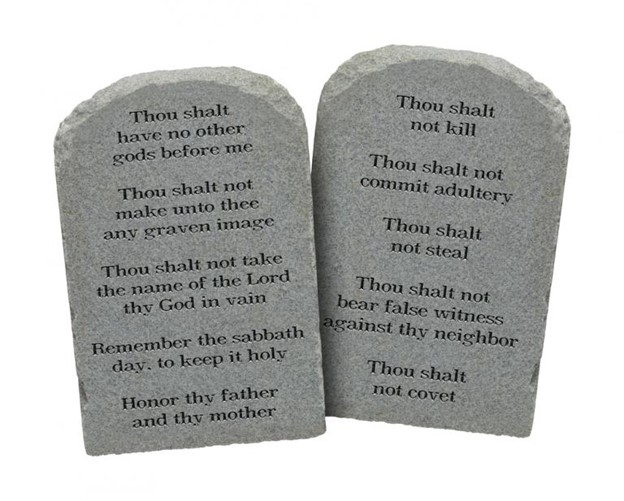
Literally carved into stone was the eighth commandment: You shall not steal. Even though we are encoded from birth with the knowledge that stealing is wrong, God thought it important to tell His chosen people (Israel) that it was a sin to steal.

Sometimes we minimize the seriousness of stealing by considering the value of the thing stolen. Stealing a car IS much more serious than stealing a hammer. Not only is the car more expensive to replace, it serves a greater function than the hammer. However, there is no moral distinction between petty theft and grand theft. Whether classed as a misdemeanor theft or felony theft, wrong is still wrong.

Some may rationalize taking small items of little value such as taking a few grapes to eat while grocery shopping (and not paying for the grapes), or taking office supplies (that won’t be noticed) from work. Yet, the grapes are stolen. The office supplies are stolen. Rationalization is a way of explaining why the stealing was not really that bad.

Sometimes people justify their theft. “Because of all the hard work I put in, the company owes me...” a stapler, a tape dispenser, or a package of TP. Justification is a way of explaining why the wrong action is actually a right action.
Men do not despise a thief if he steals To satisfy himself when he is hungry; But when he is found, he must repay sevenfold; He must give all the substance of his house. 
—Proverbs 6:30-31
Rationalization and justification (as well as sympathy and understanding) do not change the reality of stealing.

Sometimes people steal without taking anything tangible. That’s why there are laws dealing with patents, trademarks, and copyright. When people make copies of materials without making a purchase, it is theft unless permission is given from the producer of that material. Making copies of written material, music, movies, software, etc. that deprive the originator of making a profit is just another way of stealing. No one deserves a pirated copy of a song just because the song artist is a bazillionaire.

Cheating is another way of stealing without taking something tangible.

So, what is God’s expectation?

If you’ve been stealing, stop stealing. 
Or, just don’t steal. 
Is that all?
He who steals must steal no longer; but rather he must labor, performing with his own hands what is good, so that he will have something to share with one who has need. 
—Ephesians 4:28
The solution to stealing is not merely to stop stealing, but rather, to work and earn an income and share with those in need.

Why is stealing sinful? 
All forms of stealing present something that belongs to another as if it belongs to you. Stealing is a lie against reality and it opposes the very nature of God.


Mark Stinnett
March 12, 2023


Friday, March 10, 2023

Adultery: Why Is Sin Sinful?

“Thou shalt not commit adultery.” 

That is the seventh of The Ten Commandments from the old King James Version. For many, that wording sounds holy. Forceful. Absolute!

Why is adultery sinful?

Our word adultery came into the English language from a Latin verb adulterare meaning literally, to alter, but also used to mean, to corrupt. (This Latin word is not connected to the English word adult; nor is it connected to the Greek term that it translates.)

The Greek term for adultery was very specific in its meaning. It referred to a sexual relationship between people who were married, but not to each other. Remember that while the New Testament was written in Greek, the Greek language was used hundreds of years before Christ and across multiple cultures. So, this meaning was not limited to the New Testament.

While every culture forbids adultery, the rules are different and may vary between men and women. For example, at one time ancient Greeks considered adultery to be a secret sexual relationship with a woman without the permission of her master. In many cultures men have been allowed to have sexual relationships with non-married women. Only if his relationship involved a married woman (not his wife) were there consequences.

In early times consequences were carried out by family members since adultery was considered a violation of the family. This was true in Roman society until laws were passed that made adultery a civil offense with consequences carried out by the legal establishment. Consequences varied from fines to revenge (by family members) to death.

Among some groups, cultural norms or laws required the husband whose wife was an adulteress to divorce her (or put her to death). In most cases cultural norms and laws were stricter regarding women since married women were often considered property. They were therefore bound to absolute fidelity in the marriage.

By the time of Christ infidelity among both husbands and wives was common in Roman society. So was divorce.

For the Jews, as with others, adultery involved sexual intimacy only, and divorce was allowed, though the acceptable reasons were debated. Recall that Jesus reminded the Jews that Moses demanded a certificate of divorce because of the hardness of their hearts (Matthew 19:7-8). In other words, husbands had mistreated their wives by discarding them. So, to protect women a legal certificate was required. Men had to have a legitimate reason for divorce and had to produce a certificate indicating that reason.

Jesus ended the debate by pointing back to creation: “But from the Beginning it has not been this way.” Jesus taught fidelity in marriage for both the husband and the wife.

Ideally marriage should reflect the very character of God. The words fidelity, loyalty, commitment, faithfulness and devotion describe God. That means that in His relationships God does not show partiality. He is not fickle in his commitment. He does not tire of love. He does not quickly grow impatient or angry. In order to preserve a relationship God is willing to forgive.

God does not quit a relationship. Even when His wife (Israel) was unfaithful, He was patient and tried to woo her back. (Hosea 2)

Why is adultery sin? Adultery violates faithfulness and commitment, the very character of God. Adultery is sin because it is a lie against the truth of God’s divine nature.


Mark Stinnett
March 5, 2023


Monday, February 27, 2023

Lying: Why is Sin Sinful?

Imagine for a moment that in the creation sequence when God said, “Let the earth sprout vegetation…” marble-size balls of fire were produced instead. When God told mankind to “fill the earth, and subdue it,” what if He really meant for lions to be in charge, as ’king of beasts’ and to subdue man? What would this say about God’s word?

The very essence of truth was established in the creation sequence. When God said, “Let there be light,” the Bible tells us, “and there was light.” The very thing that came from the mouth of God was God’s intention and the result. A person could go though the entire creation sequence and see the same pattern of truth. So, from the beginning, truth was established.

Truth is especially important in relationships. Only through truth is trust built. When a new acquaintance tells his name, it is accepted as true, based on the assumption of mutual trust. As the relationship continues, it grows stronger through consistent truthfulness. Without the confidence of truth in a relationship, the relationship will not survive for long.

In Scripture, God is always true to His word. When He speaks, He speaks truth. There are things that God has not revealed to mankind, yet they are withheld according to His wisdom. So, His revelation to man is true and complete, though it may not be exhaustive. (How could we even understand all that God could reveal?)

In light of God’s intimate relationship with truth, what does he expect of created man?

In short, God expects truth. When we speak, we must speak according to reality.

Esau, the older of the twin sons of Isaac, expected to receive from his father the blessing and the birthright. The birthright was a double-portion of the physical inheritance. The blessing pertained to the future and was prophetic in nature. The oldest son was promised preeminence in the family. Blessings were given in regard to position, rule, dominion, strength, longevity, prosperity and relationships.

Isaac was Abraham’s son of promise and he received both the birthright and the blessing. However when he was old and ready to pronounce the coveted blessing on His son Esau, Jacob stole the blessing from his father by pretending to be Esau.

Later Isaac realized Jacob’s deception. However, the only thing he could say to Esau was, “He shall be blessed.” Isaac could not undo what had been done. He could not take back the things he had said as a blessing to Jacob even though Jacob’s deception was unfair.

Isaac live by a code of truth. Whatever a man spoke, it was regarded as set and unchangeable. That was how he established good character. It was the basic ingredient of integrity . It was how relationships were built and maintained.

People have devised all kinds of ways to hide their lies by using different terminology: deception, half-truth, white lie, clever marketing, loop-hole, etc. Yet, a lie is a lie.

Just as it is with God, man is expected to speak truth. Whenever you or I speak, it should be as firm and representative of reality as God’s word in creation. We must not play games with words to hide lies. A lie hides or obscures truth. It violates the most basic element on which relationships are built.

Why is lying sinful? A lie stands against reality and opposes the very nature of God.


Mark Stinnett
February 26, 2023


Monday, February 8, 2021

God is Good?

What does it mean that “God is good”?


I have heard that statement all my life, even more in recent months. Most recently I’ve begun to wonder what people mean when they say, “God is good.” I’ve begun to wonder what that sounds like to someone who does not believe in God, or someone weak in faith who is experiencing great difficulty in life. I know this...

  • The presence of evil does not change the good character of God.
  • Calamity and injustice in this world do not change the good character of God.
  • Your circumstances do not change the good character of God.

God revealed His divine character to Moses:
“The Lord, the Lord God, compassionate and gracious, slow to anger, and abounding in lovingkindness and truth; who keeps lovingkindness for thousands, who forgives iniquity, transgression and sin; yet He will by no means leave the guilty unpunished….”
—Exodus 34:6-7 (NASB95)
We should recognize that God is always full of love and, at the same time, always full of justice. The fact that God is compassionate and slow to anger tells us that there is reason for compassion and reason for anger. The fact that God will not let the guilty go unpunished tells us that sin will be punished, so justice ultimately will be served. The fact that God forgives tells us that God deeply desires a relationship with created mankind.

So, the character of God gives us understanding of God and understanding of the world we live in. When we read the book of Genesis, it is evident that God did not create the world in a broken state. Nor did He create man in a sinful state. Yet, because of sinful man, we now live in a broken world. So, we should not be surprised that we live with calamities, injustices, and personal difficulties, not the least of which is death itself.

Think about it. Mankind sinned and God did not destroy him. Said another way, mankind foolishly broke fellowship with God and walked away. Yet, God deeply desired fellowship with created man. Because of His divine nature, He determined to remedy the situation through Jesus.

So what does all this have to do with, “God is good”?

God allows evil to remain; allows calamities to occur; and even allows YOU to experience difficulties, suffering and death. That is the world mankind has made for himself, not the world God created for man. That is what we deserve.

God is just, so there has to be a payment for sin. From the beginning, the consequence of sin was death. So, before man was even created, God had devised a plan in which He would preserve His character of being just. He would offer to pay for man’s sin debt. He paid the debt by offering His only begotten Son as a sacrifice for your sins and for my sins. God fixed man’s sin problem through Jesus Christ. Can you think of a suitable word to describe this expression of God’s justice and love?

The sacrifice of Jesus bought about reconciliation between God and mankind. Reconciliation is a relationship word. It means that God ended the division and brought Himself and mankind into a friendship relationship. But He did not stop there. God wants that relationship to last forever—literally! So, He made a promise to those who believe in Jesus Christ and devote their lives to Him. He promised eternal life in a new heaven and new earth. The new heaven and new earth will not be broken. It is a place described as paradise. God will be there. Jesus will be there. All who are holy and righteous will be given new bodies so they can live there forever. Can you think of a word to describe all that God has planned for His holy ones?

God is good!


Mark Stinnett
February 7, 2021

Monday, July 1, 2019

What King David Saw in the Law


Some Christians have reasoned that the Old Testament contains the law for Israel and the Jews; the New Testament is law for Christians. As a result the Old Testament is not given high regard, and in many churches seldom studied.

Is that all the Bible is, an ancient law code with an update for Christians?

I think NOT!

The Apostle Paul said that the earlier writings were written for our instruction. Yet the Old Testament is still largely ignored by many Christians. Let me show you something that King David saw that just might change the way you look at the Law of Moses.

The Book of Psalms is sometimes described as Israel’s song book. The songs range from praises to prayer-cries for deliverance. They deal with physical discomfort, distress in many forms, depression, abandonment, and many other human issues. Over and over the Psalmists encourage humble faithfulness to the God who created, who knows, who provides, who delivers, who shepherds, who saves, who also destroys....

The Book of Psalms is not a law book; nor is it the Christian's ’go to’ book for doctrine. Not surprisingly, of the 150 psalms, only a few refer to the Law of Moses. However, one psalm is completely devoted to the Law. For that reason it stands out as quite unique.

Perhaps better known for its length, 176 verses, Psalm 119 is more important for its attention to the Law. In this psalm King David (the assumed author) saw something quite amazing in the Law.

In general, law is considered to be burdensome and restrictive, and that includes the Law of Moses. Law is composed of rules; it can be difficult to read and it is impossible to follow perfectly. Even so, the kings of ancient Israel were instructed to make a personal hand-written copy of the Law of Moses, the first five books of the Old Testament, and read and meditate on the Law daily.

Psalm 119 records what David saw in the Law. Yes, he saw the rules and ordinances, but in them he found refreshment, joy, freedom, peace, and deliverance. He recognized that God had not saddled His people with arbitrary rules. God had actually revealed His divine character within the Law of Moses.

King David saw the heart of God in the Law. He saw love and mercy and holiness and justice.

God's desire was to have fellowship with his chosen people. However, there was such a difference between Him, deity, and his people, humanity, that he needed to communicate to them how they could draw near to Him in fellowship.

Who is this God that opened Himself to the scrutiny of his created beings? 

Who is this God that revealed his thoughts to mankind? 
Who is this God that directed His people with instruction that would move them into a fellowship relationship with their Creator?

What King David saw in the Law? God himself!

When you pick up your Bible and read the Law, the historical narratives, the poetry, the prophets; as well as the parables and the doctrine and instruction of the New Testament...do you see only rules and restraints? 

Look closer...!
The fear of the LORD is the beginning of wisdom,
And the knowledge of the Holy One is understanding.
--Proverbs 9:10

Mark Stinnett

Monday, June 24, 2019

Do You Know God's Mind?


The creation narrative in the Bible might seem impersonal, even for believers...then again...

God actually spoke to His created beings.

And God blessed them; and God said to them, "Be fruitful and multiply, and fill the earth, and subdue it; and rule over the fish of the sea and over the birds of the sky, and over every living thing that moves on the earth." Then God said, "Behold, I have given you every plant yielding seed that is on the surface of all the earth, and every tree which has fruit yielding seed; it shall be food for you; and to every beast of the earth and to every bird of the sky and to every thing that moves on the earth which has life, I have given every green plant for food"; and it was so.
--Genesis 1:28-30
In this blog I am not as concerned with the content of what was spoken, but rather the fact that God spoke to man. Not only does his speech demonstrate intelligence and purpose as well as authority and power (see last week's blog, "He Has Spoken!"), His spoken word is personal.

By comparison, I have built a few things out of wood in my lifetime. Yet, I have never spoken to the things I've made. They are mere objects, impersonal; inanimate objects created for my purposes.

Again, the Creator spoke to His created beings which He made in His own image.

The Old Testament prophet Amos wrote something meaningful about what God has spoken.

For behold, He who forms mountains and creates the wind
And declares to man what are His thoughts,
He who makes dawn into darkness
And treads on the high places of the earth,
The LORD God of hosts is His name. 
--Amos 4:13
The Bible does not 'contain' God's word, it IS God's word; his thoughts written for created man.

Why do you speak to people?

Why do you reveal your thoughts to others?

God has revealed his thoughts to mankind. In dong so He has revealed Himself to us. God is not silent; He has not hidden Himself. He has opened His heart while reaching out to man.

We must remember that the Scriptures are not just any words. The source of these words is our Creator. We can know the mind of God.

To this one I will look,
To him who is humble and contrite of spirit,
And who trembles at my word.
--Isaiah 66:2

Mark Stinnett

Monday, April 16, 2018

"I AM": Slow to Anger


Eyes squint. Jaws clench. Fists tighten. Nostrils flare upon inhale.

You've seen it...ANGER!
(Expect fire upon exhale.)

If you have ever made someone angry, very angry, and that was not your intention, what a relief it was when they slowly exhaled and began to relax their fists...jaw...eyes: Self-control.

Better yet is the person who demonstrates self-control before the anger begins. They do not flare up quickly. They do not have to cool down; they never heat up in anger! The circumstances could have made the person angry, but the anger was controlled at the very beginning. Slow to anger.

Imagine yourself among a small group of friends. Everyone is asked to list a few words or phrases related to 'love.' Surely someone writes compassion; also grace and kindness. Would anyone write down, 'slow to anger'?

When God passed in front of Moses and verbally identified himself, the first few attributes expressed different facets of God's love.

The LORD, the LORD God,compassionate, gracious, slow to anger, and abounding in lovingkindness and truth.
--Exodus 34:6
  • Compassion is an expression of God's love as He withholds anger and rejection that are truly justified.
  • Grace is an expression of God's love as He generously gives when it is completely undeserved.
  • Lovingkindness is an expression of God's love as He makes promises simply because he loves, and with that same love is loyal in keeping His promises.
        [Read more on these expressions of love...Compassion, Grace, Lovingkindness]

Right in middle of these love expressions is the attribute, 'slow to anger.' I cannot help but think that slow to anger is yet another expression of God's love.

Worded slightly differently, the expression slow to anger describes God as one who takes a long time in becoming angry; an anger procrastinator. It reminds me a number of older people I have known; people who have experienced life and understand human nature. They know something about human weakness; they understand the human dilemma. They recognize the brevity of life and know the things in life that are of value, true value. They know the futility of anger and its destructive end.

They are not unconcerned or uncaring, they simply know how to live without acting impulsively or overreacting to life's circumstances.

Isn't that a loving characteristic? Isn't it an act of love when a person does not become angry quickly? Isn't it a sign of love when a person does not lose his or her temper? We might not always 'see' the absence of impulsive anger, and as a result might not recognize the love that is there. However, it is an expression of love and it is an attribute of God.

God does not 'try' to take a long time in becoming angry. It is not his 'second' nature. It is not by force of will or internal fortitude that God wrestles with himself and overcomes the impulsive flare-up of anger. It is by nature that God takes a long time in becoming angry. It is just the way he is.

It is as if God had said to Moses, "I AM who I am . . . I AM slow in becoming angry."

Oh wait...He did!

     The LORD God...slow to anger....
     --Exodus 34:6

Monday, April 9, 2018

"I AM": Lovingkindness

     Be gracious to me, O God, according to Your lovingkindness....
     --Psalm 51:1

What is lovingkindness?
It sounds sweet, but what does it really mean?

You can separate the compound word into two words, loving + kindness, and get an idea. However, the full meaning is masked by translation and ancient usage. The English language really does not have a good word to translate the full meaning of the simple Hebrew term: chesed. (Sounds like KEH-sed.)

Different translations of the Bible use terms such as kindness, lovingkindness, mercy, steadfast love, enduring love, and others to express the meaning of chesed.

Many writers have described chesed as 'covenant love.' It is true that chesed often appears in the context of a covenant. However, one Hebrew scholar has accurately observed that chesed is not tied to the covenant, rather, the covenant is tied to chesed.

The picture painted by the term chesed is that of a deep love that would motivate someone to make a covenant promise to another. Once the promise is made, the covenant promise acts as a reminder of the original love. More specifically, God's lovingkindness [chesed] moved him to make a covenant promise with man, and it also described his loyalty to that covenant promise. He will never forget a covenant promise that He has made. He will not leave it unfulfilled.

After King David had committed adultery with Bathsheba and had her husband killed to cover up his sin, he was confronted by the prophet Nathan. David confessed his sin and prayed to God for forgiveness by appealing to God's lovingkindness. [Read this in Psalm 51.]

David understood that there was no sacrifice that he could offer to take his sin away. According to the justice of the Law of Moses, there was no forgiveness. So, he appealed to God's chesed. He was not trying to back God into a corner as if to force God's loyalty to His covenant promise. Rather, David was crying out in desperation for God to love him with the same love that moved Him to make the covenant promise in the first place.

David appealed to the very nature of God. He recognized the enduring love of God that had moved Him to make promises to his forefathers Abraham, Isaac, and Jacob, and to the nation Israel. David appealed to the divine kindness of God that would motivate him to initiate a covenant promise. David's appeal was that God would continue his steadfast love toward him because He had already loved him.

     Be gracious to me, O God, according to Your lovingkindness [chesed]....
     --Psalm 51:1

God does not try to love [chesed]. It is not his 'second' nature. He does not analyze and synthesize a situation, wrestle with his will, and then finally decide to love. It is his nature, his identity. It is just who he is.

It is as if God had said to Moses, "I AM who I am...I am chesed."

Oh, wait...He did!

     The LORD God...abounding in lovingkindness [chesed]....
     --Exodus 24:6

Monday, April 2, 2018

"I AM": Grace

Have you ever had an occasion in which you were so happy that you wanted to celebrate? You received a promotion or a bonus at work, or a new child was born into the family, or very difficult circumstances were resolved. You wanted to celebrate and share your happiness with friends. So...YOU threw the party. YOU bought the meals. YOU provided for friends and family because you had received a special gift.

That kind of giving is an illustration of grace, and few shine brighter than King David of ancient Israel.

King David desired to build a more permanent temple for God that would replace the portable tabernacle that had been made at the time of Moses. The prophet Nathan gave him the 'go ahead' to proceed with his plans. However, at God's instruction Nathan quickly returned to tell David that as a warrior he had too much blood on his hands. He would not build a temple for God, instead, the temple would be built by his son Solomon.

Nathan continued with God's message to David, a prophecy and a promise:

     Your house and your kingdom
        shall endure before Me forever; 
     Your throne shall be established forever.
     --2 Samuel 7:16

Though David may have felt a little sad over not being the builder of God's temple, he understood the magnitude of the promise. In response to God's gracious promise, David searched for someone on whom he could show grace. He found Mephibosheth, the crippled son of his dear deceased friend Jonathan.

David brought Mephibosheth to his palace in Jerusalem, restored his family's land to him, and invited him eat daily at the king's table. Mephibosheth recognized his inability to offer anything in return and referred to himself descriptively as a 'dead dog.' Yet David was delighted to offer his gift of kindness. (Read about Mephibosheth in 2 Samuel 9.)

In a figurative way every Christian is a Mephibosheth before the King of heaven. In reality, as sinful creatures we are nothing but 'dead dogs' before God, useless and undeserving.


But God, being rich in mercy, because of His great love with which He loved us, even when we were dead in our transgressions, made us alive together with Christ (by grace you have been saved), and raised us up with Him, and seated us with Him in the heavenly places, in Christ Jesus, in order that in the ages to come He might show the surpassing riches of His grace in kindness toward us in Christ Jesus. For by grace you have been saved through faith; and that, not of yourselves, it is the gift of God.
--Ephesians 2:4-8

God does not try to be gracious. It is not 'second' nature to him. It is not a battle of the inner will in which grace wins out over something else. God is, in himself, by nature, full of grace. It is as if God could have said to Moses, "I AM who I am, I am grace."

Oh, wait . . . He did.

     The LORD God . . . gracious....
     --Exodus 34:6

Monday, March 26, 2018

"I AM": Compassion

Childbirth...
The ears of the nurses ringing from the screaming voice of the 'lady in labor'...
     "Just get that thing out of me!!!"
Then, moments later the world is at peace with the mother's gentle coos...
     "She's so precious...the most beautiful baby in the world."
It can be somewhat amusing.

For the rest of her life a mother will experience pains of a different kind, pains emerging from deep within. I suppose most people have some understanding, but no one understands like a mother. It is the pain felt when one of her little ones scrapes a knee or cuts a finger. It is not mere emotion tugging at the heart, but rather, a true inner pain that hurts along with the child's pain. Dad's can feel the same kind of pain, just not, I think, quite like a mother.

That deep-seated inner feeling that aches when your own little one is hurt is something we call compassion.

Of all the words God used to describe himself, the word compassion, or mercy, is more descriptive of his emotional involvement with humanity than any other word. With that in mind, consider a wonderful description of God's compassion toward his child, Israel, from Psalm 78. First, a little background....

God delivered the nation of Israel from Egyptian slavery through a dramatic display of miracles which ended with Israel crossing of the Red Sea on dry land. However, after only a few days, the singing and dancing of a freed nation turned into complaining.
     The people were thirsty;
     The people were hungry. 

God was angry with the people for their lack of faith. Having seen His mighty hand of deliverance they should have realized that He would also be their provider. Yet, they doubted. Their complaining continued and they ultimately sank into idolatry. Over and over the people failed so that the description was written:

     Their hearts were not loyal to him.
     They did not keep his covenant.
     --Psalm 78:37 (NLT)

Yet, in spite of their weak faith, God responded with compassion:

     Yet he was merciful and forgave their sins
        and did not destroy them all.
     Many times he held back his anger
        and did not unleash his fury!
     For he remembered that they were merely mortal,
        gone like a breath of wind that never returns.
     --Psalm 78:38-39 (NLT)

God's was compassionate when faithless Israel deserved anger and wrath. God would have been justified in destroying them for their complaining and idolatry. There was nothing they could do to redeem themselves; nothing that they could offer to make amends. There was no 'undo.' Their only chance for survival was a deep 'motherly' love that would move God to act with kindness instead of justice. They needed compassion.


And God responded with compassion. It is tempting to say that He responded 'in spite of' their weakness, but in reality it was 'because of their weakness.' So it is with us today.

A mother's compassion is merely an illustration of God's compassion. It is God who gives meaning to compassion.

God is compassionate as a part of his divine nature. He does not try to show compassion. It is not 'second' nature. He does not wrestle in his inner will until compassion wins out over something else.  God is, in Himself, by nature, full of compassion. It is just who He is.

God extends compassion when it is not deserved, when justice calls for rejection, judgment, or even death. God could have said to Moses, "I AM who I am; I am compassion."

Oh wait . . . He did!

     The LORD God, compassionate....
     --Exodus 34:6

Monday, March 19, 2018

"I AM": God's Divine Character


Do you remember signing yearbooks in high school? Do you remember the sentiment written almost as often as “Congrats” and “Good luck”?

“Stay the way your are.”

That was a friend’s way of saying that you were so cool, you just couldn’t get any better. You were fully accepted; complete; virtually perfect.

It was nice sentiment...but not long after graduation, we all discovered it to be quite unrealistic.

For one thing, kids are incomplete, imperfect. That’s why they are called kids and not adults. They don’t get out of high school or college and start at the top. There is an expectation of maturity from a state of immaturity.

Not only that, we cannot avoid change. We are human. We simply do not remain the same physically, emotionally, socially, intellectually, etc. It is a part of our human nature...change.

Did you know that God is changeless?

I can understand the word, but I cannot seem to wrap my mind around the idea. The very nature of God is different from our human nature. Don’t think of that as a fact...think about what it means. 


Stop. Think.

You may remember how Moses had been chosen by God to deliver the Israelites from slavery in Egypt. During his preparatoin he said to God:

“Behold, I am going to the sons of Israel, and I will say to them, ‘The God of your fathers has sent me to you.’ Now they may say to me, ‘What is His name?’ What shall I say to them?”
God said to Moses, “I AM WHO I AM”; and He said, “Thus you shall say to the sons of Israel, ‘I AM has sent me to you.’ ”
—Exodus 3:13-14

“I Am” doesn’t seem to be much of a name. Yet that is what God instructed Moses to tell the Israelites: “I AM has sent me to you.”

How do you think that struck their minds? How was that different from the gods of Egypt? Was it just clever word play?

The name ‘I AM’ sets God apart from humanity and distinguishes Him uniquely.

‘I AM’ means the same as ‘I exist.’ That separates God from all of creation which had a beginning. ‘I exist’ separates God from the restriction and passage of time and places Him in ageless eternity.

‘I AM’ suggests that God is not strictly associated with any one aspect of creation. He is God of the sun, but he is not confined as if he is only a 'sun-God.' He is God over all with no restriction based on time or place or any other created thing.

‘I AM’ suggests changelessness. God was not one way yesterday and in some way different today. Nor is He one way today and yet may be another way tomorrow.

‘I AM’ tells us that God does not improve; He does not need to improve. He is complete in Himself. He is perfect; flawless. To say that in His divine character He ‘was’ or ‘will be’ would be to suggest that there could be a point of comparison suggesting a difference. He was not, is not, and will not ever be inferior or superior to what He is.

‘I AM’ tells us that God is the definition. He gives meaning to all that exists. All things begin with God. All things are sustained by God. All things end with God.

Moses asked to see God’s face and God passed before Moses, but He first declared himself verbally to Moses. In our English Bibles His name appears as the word ‘lord’ presented in all capital letters: LORD. Read Exodus 34. Think of ‘I AM’ as a name.

Listen as God declared Himself to Moses by name in verse six:
     The printed text reads, "The LORD God...."

Now, read His name...not a sentence...and ponder and wonder...

‘I AM’...God...

Monday, March 12, 2018

An "Aha!" Moment: God


Setting: Seventh grade math class...back when I was a school teacher...
   Matt did not understand; I explained again.
   Matt still did not understand; I explained again.
   Matt STILL did not understand; I explained YET AGAIN!

   "Aha!"

It was an exciting moment for Matt, and a gratifying moment for me as his teacher: an "Aha!" moment. Clarity. Insight. Knowledge realized.

Have you ever had an "Aha!" moment when you came to a sudden new realization of something you already knew, or perhaps something you had been told but did not understand? It was not new knowledge, but previous knowledge that had a new, strong and sudden impact.

Young parents are often struck with surprise as they realize with new insight the love their parents had for them. They knew it all along, but as they experience the deep love for their child, they realize that their parents must have had a similar experience with them. "Aha!"

Can you imagine the "Aha!" moment for the Apostles when they realized that the Messiah was not setting up an earthly kingdom? Jesus had tried to tell them; no, he had told them, but they had not understood.

Jewish Pentecost: Fifty days after the Passover and the crucifixion of Jesus. The Holy Spirit was poured out upon the Apostles and they preached the gospel for the first time to a large Jewish crowd. What was it like when the Jews suddenly realized that Jesus of Nazareth WAS the prophesied Messiah? That they had crucified the Son of God!?

  • Is your knowledge of God made up of teachings that have merely been handed down and accepted?
  • Is the identity of Jesus of Nazareth as the Messiah and Son of God simply a dry biblical fact?
  • Is your salvation merely an exercise in holding to correct biblical doctrine?
  • Is your religion comfortable, but lacking AWE? 
  • Have you chosen an easy path just to get along with others?

Pause. Reflect.


  • Are you a Christian who has never had an "Aha!" moment?
  • Does the magnificence of God impress your mind?
  • Does His creation bring about a sense of awe in your heart?
  • Does the reality of his wrath, but also his forgiveness, affect your soul?

Is 'God' a comfortable belief or an awe-inspiring being that overwhelms you?

Will you appear before God standing upright or will you tremble to the ground on your knees...on your face?

How great and wonderful is your God?

Oh that we might lift our eyes to see His magnificence.

The LORD passed in front of him [Moses] and proclaimed, "The LORD, the LORD God, compassionate and gracious, slow to anger, and abounding in lovingkindness and truth; who keeps lovingkindness for thousands, who forgives iniquity, transgression and sin; yet He will by no means leave the guilty unpunished, visiting the iniquity of fathers on the children and on the grandchildren to the third and fourth generations."
And Moses made haste to bow low toward the earth and worship. 
--Exodus 34:6-8

Monday, October 30, 2017

Nobody's Perfect

“Nobody’s perfect.”

How easily those words roll off the lips. After all, it is true, “nobody’s perfect.”
How often do you think that simple statement is used as an excuse?

What are we really saying when we say "Nobody's perfect"?

Nobody’s perfect. So, ‘I’ am not a perfect human being. Since I am not perfect, it is clear that God did not expect perfection, otherwise He might have created me differently. In fact, my imperfection is the reason for God's grace. The grace of God covers my imperfection. So, it is not bad if I sin because God doesn’t expect me to be perfect and ‘do right’ ALL the time, otherwise he wouldn’t have offered grace.

Surely you can see the silly reasoning.

The Apostle Paul cut through this senseless way of thinking. After assuring Christians that God’s grace was greater than their sin, he continued with a rhetorical question (in Romans 6:1):
Are we to continue in sin that Grace may increase?
So, it is true that no one is perfect. And it is true that God recognizes our imperfect humanity. Yet, it is also true that God is holy and he expects those who follow Christ to be holy. (See 1 Peter 1:15.) So, you might say that God is understanding of our humanity but also demanding.

How do we make sense of this? How can God demand holiness and purity and righteousness, yet at the same time recognize that it is humanly impossible for people to measure up to His flawless character? Or, from a different perspective, how can God be loving and understanding and tolerant of imperfect mankind, yet demand that disciples of Christ rise to His high standard of moral purity and holiness?

We must understand that God is true to his character. Since He is completely pure and holy, then He cannot tolerate impurity or unholiness; He cannot tolerate sin. It is against his nature.

However, we must also recognize that God is love. Love is just as much a part of God’s character as holiness. Yet these two attributes do not struggle against one another. God does not react in holiness in one instance and then in love in another instance. He is not divided in His mind wondering whether it is better to love or better to maintain holiness. He is completely holy at all times and He loves at all times. The two attributes exist in perfect harmony in the character of God.

We must recognize that God’s love does not ignore or overlook sin. Rather, God’s love toward mankind motivated Him to take action regarding man’s sin problem. Instead of lowering His standard of holiness He provided the means by which mankind can become holy like Him.

That is what the cross of Christ is all about. It was an expression of God’s love for mankind; a sacrifice that was voluntarily made for sinful man. On the cross Jesus was forsaken by God as He died for you and for me so that we would not have to suffer rejection and death.

Yet at the same time, the cross of Jesus is an expression of God’s justice. God's wrath is justified because He is holy. Sin stands opposed to the very character of God. The death of Jesus was a voluntary and sinless sacrifice for sin. His sacrifice satisfied the wrath of God.

The death of Christ on the cross expressed God’s love and His holiness. God created man in His image. He still desires that we come to be just like Him. He has provided the way.

Thursday, August 10, 2017

Transparent


A child is overheard heard calling to his father, “Dad! Watch this! Watch, dad, watch!” Children love for their parents to watch.

A child is often quiet when caught doing something wrong. He wishes his dad had not been watching at that moment.

   The eyes of the LORD are in every place, 

   Watching the evil and the good.
   --Proverbs 15:3

How does this proverb strike your mind?
Is God the father you wish to call out to so that He will watch you? Or do you feel ashamed when you think about God hoping that He does not look your way (because you know you do not measure up to His standard)?

In reality, He is the same God. He sees the good AND the evil. He IS watching. He sees everything.

Perhaps the question is not about how you feel about this reality, but whether you have a relationship with God. You see, if  you are a child of God, then even when He sees you doing evil, He will act for your good. 

God is the loving father who is joyful when we do good; and He is the loving father and disciplinarian when we do something wrong. The goal of His discipline is to provide correction and move us back to the right path. He loves his children and always acts for their good, whether blessing or discipline.

Be wise and take inventory of your relationship with God.

Monday, May 1, 2017

The Importance of a Necklace

What are the kinds of things that a person wears 'around the neck'? Aside from simple jewelry, some may wear a necklace with a special locket, or perhaps a cross, or a ring, etc. These objects usually represent things of value such as a cherished memory, a strong belief, or a valued relationship.

What are the kinds of things that are ‘written on the heart'? These are not things that are merely memorized. They are etched onto the mind and heart as a permanent reminder of something of great importance. Things written on the heart affect the way a person thinks, affect day-to-day decisions, affect behavior and speech.

Do you know what God wants you to wear around your neck? Do you know what God desires for you to have etched onto your heart? Do you know the things that God regards as having the deepest meaning and value, that should mold your character and define your being?

   Do not let kindness and truth leave you; 
   Bind them around your neck, 
   Write them on the tablet of your heart.
   --Proverbs 3:3

The word ‘kindness’ in this verse is more often translated ‘lovingkindness.’ It comes from a Hebrew love word that is connected to the idea of ‘covenant.’ God’s lovingkindness, or covenant love, is his steadfast love which is demonstrated by his commitment to his promises.

When the Hebrew word ‘truth’ is paired with lovingkindness it generally carries the idea of ‘loyalty.’ With respect to God, it is his loyalty to his covenant promises.

In His declaration of His divine nature, God revealed Himself as “abounding in lovingkindness and truth.” (Exodus 34:6) He extended his love to his people because of his promises and his undying loyalty to his covenant. It is His nature.

God’s ‘lovingkindness and truth’ should give us insight into Solomon’s words. With respect to man, ‘lovingkindness and truth’ refer to man's commitment to the covenant he has made with God. Man’s commitment is expressed through his holiness toward God and his love and kindness toward his fellow man. His loyalty is demonstrated through an undying devotion to God throughout life regardless of life’s difficulties and temptations.

What is it that you wear around your neck?
What is etched onto your heart?
What is it that truly defines your character?

Monday, August 8, 2016

Insight into Insight...


     The righteous is concerned for the rights of the poor,
     The wicked does not understand such concern.
     --Proverbs 29:7

The one who is righteous is engaged in behavior that is descriptive of the nature of God. So, he adopts the character of God as his own character.

Let me illustrate:

When I was in my teens and twenties I worked for my dad a few summers building houses. Dad would give me instructions on how to accomplish tasks, but also how to care for my tools. He also told me his expectations with regard to his crew of carpenters. I did what 'the boss' said.

I began to see the wisdom of dad's instruction through practice. Over time the things he taught became habits. I began to think like he thought about my tools, about the guys that worked for him, and about the expected quality of work. The values dad taught are now a part of me, "The job is not finished until the tools are put away..." just like dad said.

Not only did I learn valuable lessons, I learned something about my dad. I gained insight into his character by doing the things he taught!

The revealed word of God, Scripture, reflects God’s character. God has not given mankind instruction that in any way opposes his divine character. So, when a person follows God in righteousness, he speaks like God speaks, acts like God acts, and even learns to think like God thinks. Through the practice of righteousness he gains insight into the character of God.

Reflecting on the proverb above...
God is deeply concerned for the poor. The righteous person is concerned for the rights of the poor, not because he is a natural humanitarian, but because of his insight into God’s character through righteousness.

The wicked person is baffled; no insight; no concern for the poor.


Pursue righteousness; gain insight into God's character.